

By: Nana Karikari, Senior Global Affairs Correspondent
Nigerian billionaire Aliko Dangote has launched the continent’s largest share sale through an initial public offering for his massive oil refinery, opening ownership to everyday citizens and expanding capital access.
The landmark offering opened on Monday, featuring 4.1 billion ordinary shares priced at 525 naira each (approximately 4.55 Ghana cedis).
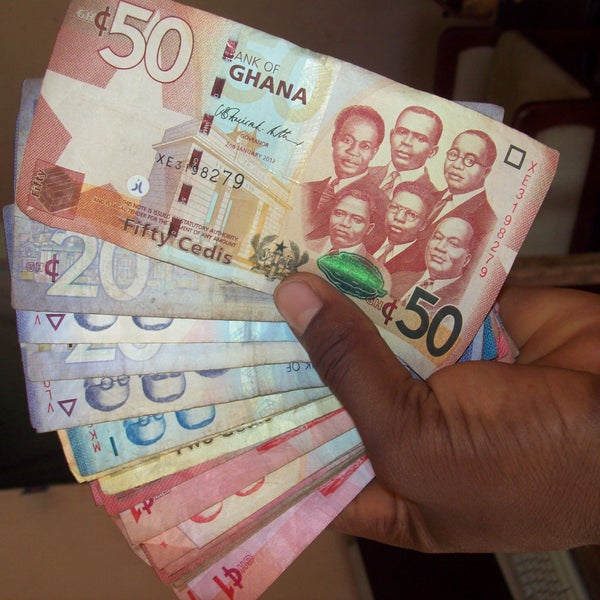
The subscription window operates from 0800 local time and remains open until October 13. Market analysts project that a fully subscribed rollout could generate 2.15 trillion naira, equating to roughly 18.37 billion Ghana cedis.
Also, figures could scale up to approximately 24.11 billion Ghana cedis if organizers utilize a greenshoe option to distribute additional stock amid high demand.
Retail Participation And Public Sentiment

Ordinary citizens can secure stakes through digital investment platforms by purchasing as few as ten shares at 5,250 naira or about 45.92 Ghana cedis. Proponents view the widespread availability as a transformative moment for local capital participation.
Chris Chijioke, a business owner based in Lagos, intends to acquire 2,000 shares driven by the unmatched industrial scale and the billionaire founder’s proven track record. However, Chijioke voiced caution regarding valuation metrics, noting that if plans to double the refinery capacity experience delays, the current price point loses justification.
He stated that “I personally think it is overvalued”. Conversely, Ibrahim Abubakar, a journalist, plans to purchase approximately 2,850 shares because he believes the refinery is “too big to fail”.
Titi Adetoye, an operations manager based in Abuja aiming to secure up to 1,000 shares, emphasized the historic nature of the rollout, remarking that “I will be a fool not to partake in it and see how it goes” while placing heavy emphasis on the founder’s name and the facility’s continental scale.
Industrial Scale And Geopolitical Tailwinds
Constructed on the outskirts of Lagos with an initial investment of approximately $20 billion or 229.58 billion Ghana cedis—though other estimates place past capital outlays closer to $19 billion or 218.10 billion Ghana cedis—the industrial complex has drastically shifted regional energy dynamics.
The plant currently processes 700,000 barrels of crude daily, reaching earlier milestones of 650,000 barrels per day while targeting an ambitious expansion to 1.4 million barrels daily by 2029.
Current valuation metrics place the enterprise between $47 billion and $49 billion, translating to roughly 539.50 billion up to 562.46 billion Ghana cedis, which dwarfs its initial construction capital.
Operations have benefited from international supply constraints tied to the Iran war, amplifying cross-border demand for refined diesel and jet fuel throughout African and European markets.
Market Transformation And Expert Outlook
The mega-refinery has successfully converted Nigeria from a net fuel importer into an active exporter, alleviating historic domestic supply bottlenecks caused by decades of neglected state-run infrastructure.
Mohammed Saidu, head of research and investment analysis at Lagos-based TrustBanc, emphasized that “It is going to be a game-changing IPO for Nigeria’s markets,” predicting an influx of millions of first-time retail participants.
Meanwhile, corporate governance questions persist regarding ownership concentration. Despite opening the enterprise to the public, Dangote retains an 87 percent controlling stake in the asset. Joachim McEbong, a senior West Africa analyst at Control Risks, pointed out structural criticisms by asserting that “It is not something someone can classify as people-driven if you still own 87% of the refinery and there are many ways that narrative breaks down.”
Looking ahead, corporate leadership plans to leverage investor enthusiasm—mirroring a previous private placement that was 3.7 times oversubscribed—while exploring broader international expansions, including proposed refinery developments in East Africa by 2030.
Balancing monumental private enterprise scaling with equitable public wealth distribution remains the ultimate test for emerging frontier markets.
















































One Response
how do you invest in the oil