By Nana Karikari, Senior Global Affairs Correspondent
Ghana emerged in 2025 as the fifth-largest country of origin for cocaine seized at the port of Antwerp in Belgium. Belgian customs authorities noted that the West African nation stood as the sole non-Latin American state on a top-five list otherwise made up of Ecuador, Costa Rica, Brazil, and Colombia.
Belgian customs registered nearly 55 tonnes of cocaine at Antwerp across 2025, marking a 24 per cent increase compared to the 44 tonnes intercepted the previous year. Finance Minister Jan Jambon released these findings on 21 January 2026. Public broadcaster VRT characterized Ghana’s inclusion as “de vreemde eend in de bijt”, translating to the odd one out.
Antwerp serves as Europe’s primary entry point for cocaine shipments arriving by sea. Customs definitions specify that the country of origin denotes the departure point where containers were loaded rather than where the narcotics originated. None of the illicit product is cultivated inside Ghana. Instead, traffickers source the drugs from the Andes and conceal them within legitimate export commodities.
Scale of Interceptions at Home and Abroad
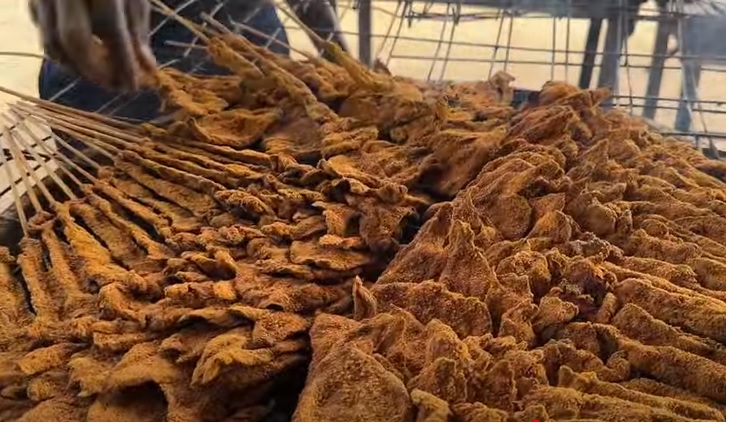
Ghana’s new status stems from a series of high-volume seizures involving cargo originating from the port of Tema. Belgian authorities intercepted 2,829 kilogrammes of cocaine hidden inside cassava flour shipments from Tema in late November. Officials uncovered an additional 1,158 kilogrammes of suspected cocaine in December. Combined, these two incidents account for approximately 4 tonnes, representing 7 per cent of total cocaine seizures at Antwerp that year.
This footprint represents a distinct shift. A major 2022 analysis of Europe’s cocaine market by the European Union’s drugs agency and Europol named Côte d’Ivoire, Senegal, Benin, Sierra Leone, and The Gambia as West African countries linked to large seizures. It did not mention Ghana.
International operations continue to expose vulnerabilities across Ghanaian logistics corridors. In June 2025, Dutch authorities at Amsterdam seized 4,500 kilogrammes of cocaine hidden in timber from Tema. In June 2026, Australian officials announced the interception of 320 kilogrammes of methamphetamine concealed in charcoal shipments from Ghana, carrying an estimated value of A$296 million. French customs officers in Dunkirk discovered nearly 3.9 tonnes of cocaine inside a container of plastic waste originating from Ghana with a destination set for Antwerp. French authorities valued that intervention at €225 million, equivalent to roughly US$261 million.
A local media tally by JoyNews identifies 28 narcotics cases tied to Ghana since January 2025, with 11 involving cocaine. Documented weight totals reach roughly 15.8 tonnes. Four cases with official financial valuations total approximately US$768 million. The largest domestic interception occurred at Pedu Junction in Cape Coast, where security forces seized 3.3 tonnes of cocaine valued in excess of US$350 million.
Government Response and Judicial Proceedings
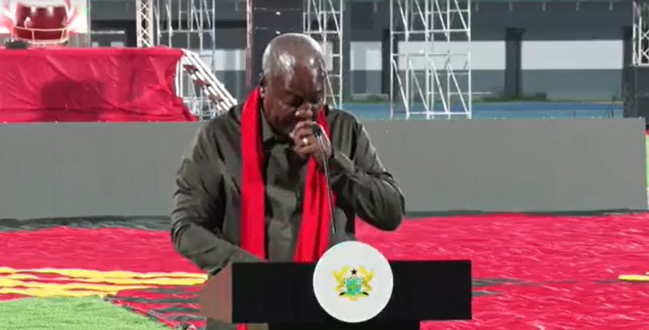
The Dunkirk seizure triggered an emergency directive from President John Mahama. On 17 September 2026, he convened security chiefs to evaluate national border defenses and ordered an inter-agency task force to submit, within two weeks, a roadmap for stopping drugs from moving through the country’s ports and borders. Ten individuals, including four personnel from the Customs Division of the Ghana Revenue Authority, faced detention during ongoing inquiries.
Authorities have arraigned all ten suspects before judicial bodies. Six defendants, encompassing a freight forwarder, a container owner, and four customs officers, appeared at the Kwabenya Circuit Court. Four additional suspects appeared before the Accra High Court and received remand orders until 13 October. Charges include conspiracy to export narcotic drugs and exporting narcotics without a licence. The alleged international mastermind, Dutch fugitive Jos Leijdekkers, widely known as “Bolle Jos”, remains at large. Prosecution records indicate that scanners flagged abnormalities during pre-export checks, yet operators cleared the containers without secondary inspections.
Interior Minister Muntaka Mubarak reported in August 2026 that intelligence-led operations yielded 217 arrests and 165 prosecutions over a 20-month span. Security forces seized over 8,500 kilogrammes of narcotics and 45.4 million tramadol tablets during the same period.
Parliamentary Debate and Institutional Friction
The political opposition brought the crisis before Parliament on Tuesday, but the assembly declined to launch a formal inquiry. Lawmakers returned from recess following a petition filed by First Deputy Minority Whip Habib Iddrisu to establish a bipartisan ad hoc committee. The proposed mandate sought to examine how the consignments were processed and cleared, which companies were involved, the state of investigations and prosecutions, port security, and the roles of state agencies.
Speaker Alban Bagbin ruled the motion inadmissible under Standing Orders 5, 6 and 103(f). He noted that four substantive narcotics cases involving about 21 people are pending before the courts, and that the proposed inquiry overlapped with them. He stated that “The combined effects of undertaking this evaluation, assessment and investigation would be, at the end of the day, to determine the very issues that the court of competent jurisdiction is supposed to determine.”
The opposition rejected this interpretation. Minority Leader Alexander Afenyo-Markin argued that the committee would have looked at container scanning, customs controls, port access, intelligence sharing and coordination between agencies, not at the guilt of any accused person. He stated, “The motion we filed before the House does not seek to try any accused person. It does not ask Parliament to determine criminal liability.” He asserted that the Speaker “got it wrong by using existing pending criminal proceedings to determine the scope and manner of the inquiry”, branding it “a sad day for democracy and parliamentary oversight” and vowing that the Minority would not let the matter rest.
International Partners and Domestic Strategy
Concerns over compromised state institutions extend across diplomatic channels. On 17 September 2026, the day of the President’s meeting, Interior Minister Mubarak cautioned that foreign allies display growing reluctance to share intelligence due to suspected corruption within domestic security agencies. He noted, “Our counterparts abroad are even beginning to doubt to give us some information because they trace it to an insider.” He added, “The very person that has been trained and trusted with that responsibility is now trading with it.” France and Australia were specifically identified as hesitant partners.
The Narcotics Control Commission confirmed that drug dynamics are evolving rapidly. Director-General Maxwell Obuba Mantey stated in May 2026 that Ghana was no longer only a transit point and now faced rising local consumption, and in July 2026 that the country was becoming a distribution hub. Drug-related arrests surged by 197 per cent throughout 2025. Enforcement teams warned that trafficking networks use fishermen to collect drugs from vessels on the high seas and bring them ashore. Following arrests tied to the Dunkirk cargo, the Commission reiterated that Ghana would not be allowed to become a safe haven, transit point or operational base for international drug trafficking organizations.
Balancing systemic institutional security reforms with transparent judicial oversight will ultimately determine whether West Africa’s emerging logistics corridors can successfully dismantle transnational cartels while preserving democratic accountability.