
By Love Wilhelmina Abanonave
The National Identification Authority (NIA) will begin enforcing the National Identity Register (Amendment) Regulations, 2026, on Tuesday, November 3, 2026.
The enforcement will be carried out through a special biometric verification task force deployed across the country.
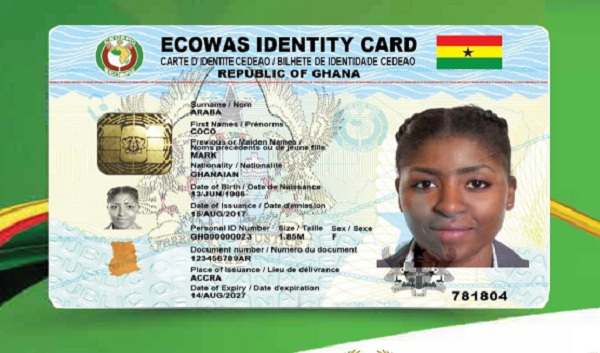
According to the Authority, the exercise is aimed at ensuring that public and private institutions verify identities using approved biometric systems rather than relying solely on visual inspection or photocopies of the Ghana Card.
The new Regulations make it mandatory for institutions that rely on the Ghana Card for identification purposes to authenticate holders through biometric verification linked to the National Identity Register.
Under the enforcement regime, institutions are expected to use NIA-approved biometric readers and verification platforms to confirm the identities of Ghana Card holders in real time, thereby preventing impersonation, fraud and the use of forged cards.
The NIA says the practice of some institutions merely looking at the card or accepting photocopies defeats the purpose of the biometric national identification system and exposes it to abuse.
The biometric verification task force will visit banks, telecommunications companies, public sector agencies, hospitality facilities and other institutions required by law to verify identities using the Ghana Card.
Institutions found to be non-compliant with the Amendment Regulations will face sanctions as prescribed by law.
The Authority has, in recent months, intensified public education on the proper use of the Ghana Card and engaged stakeholders on the need to transition fully to biometric verification.
The NIA is urging all institutions that have yet to acquire approved biometric verification devices to do so and ensure their systems are integrated for verification before the enforcement date.
It also reminded the public that the Ghana Card remains the sole mandatory document for identification and access to public services, and that its security features are best validated through biometric means.
The enforcement exercise forms part of broader efforts by the government to strengthen national security, improve service delivery and ensure the integrity of the national identification system.

























































