
By: Celestine Avi and Seth Eyiah
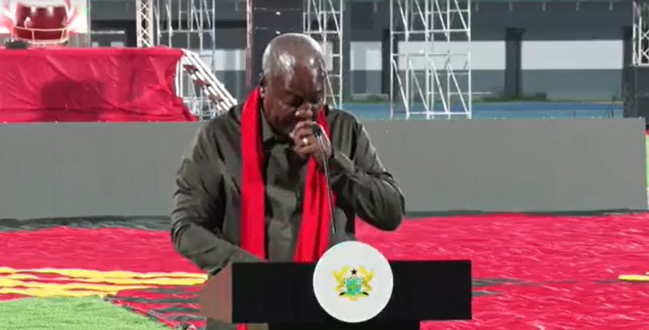
President John Dramani Mahama has challenged boards and chief executives of state-owned enterprises to demonstrate measurable value from the public resources entrusted to them.
He stressed that the ports, power infrastructure, water systems, factories, lands, buildings, equipment and other public investments managed by state institutions belong to the people of Ghana and must be used to create public value.
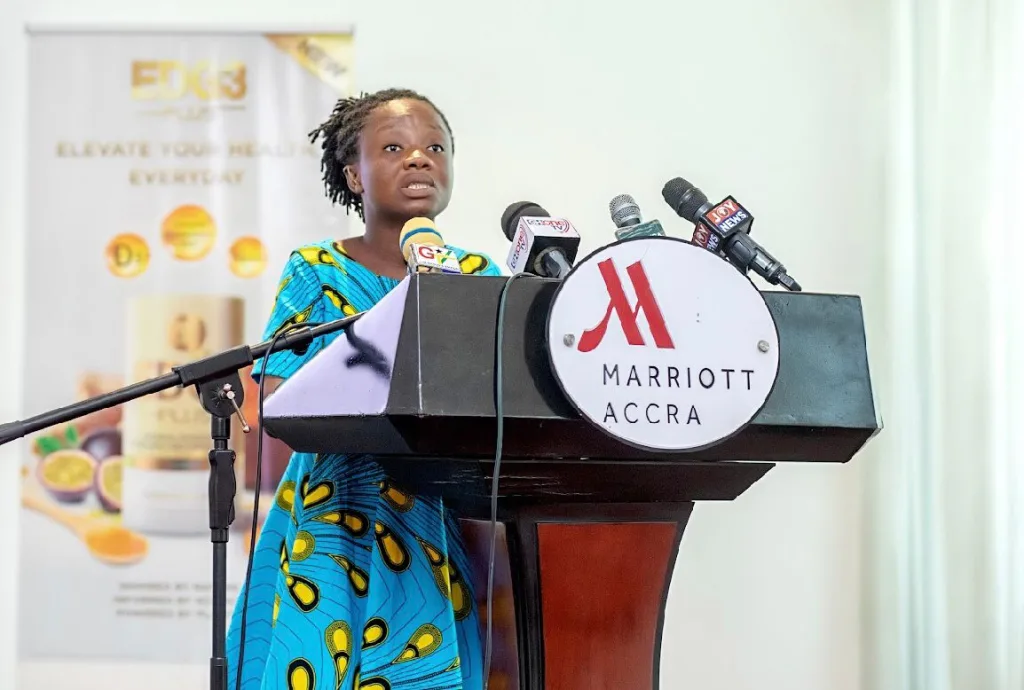
Addressing the SIGA Governing Board and CEOs Conference, President Mahama reminded heads of state institutions that they hold public assets in trust and must account for their stewardship.
He said leadership positions within state enterprises must be tied to measurable performance, value creation and profitability.


SOEs move from GH¢2.26bn loss to GH¢19.8bn profit
President Mahama pointed to significant improvements recorded in the latest State Ownership Report.
The report shows that combined revenue of state-owned enterprises increased from GH¢137.71 billion in 2024 to GH¢176.43 billion in 2025.
More significantly, the enterprises moved from an aggregate net loss of GH¢2.26 billion in 2024 to a net profit of GH¢19.8 billion in 2025.
Return on assets also improved from 1.3 per cent to 6.31 per cent, while return on equity rose from negative 1.6 per cent to 15.7 per cent.
President Mahama, however, cautioned that the results must be considered against a stronger business environment, noting that approximately GH¢11.72 billion in foreign exchange gains and a 42.5 per cent reduction in finance costs contributed significantly to the improvement.
He therefore called for the financial relief to be converted into sustained operational efficiency and stronger underlying performance.
Mahama commends consistent performers
The President commended ten state-owned enterprises that remained profitable every year between 2021 and 2025.
- The Ghana National Petroleum Corporation recorded the highest average annual profit of approximately GH¢2.25 billion, followed by the Ghana Ports and Harbours Authority with GH¢1.41 billion.
- The Minerals Income Investment Fund recorded average profits of GH¢773.9 million, while Bui Power emerged as a new dividend-paying institution with average profits of GH¢348.1 million.
- He also recognized the consistent performance of the Volta River Authority, Ghana Exim Bank, Ghana National Gas Corporation, TDC Company Limited, Ghana Supply Company Limited and the Venture Capital Trust Fund.
President Mahama said consistency in performance creates an obligation for such institutions to pursue even higher standards of governance and efficiency.
TOR, Ghana Water and COCOBOD record major turnarounds
Several state institutions recorded significant recoveries during 2025.
- Tema Oil Refinery moved from a loss of GH¢745 million to a profit of GH¢1.09 billion, described by the President as its strongest performance in almost a decade.
- Ghana Water Limited also moved from a loss of GH¢3.06 billion to a profit of GH¢635 million, while the Ghana Cocoa Board recovered from a loss of GH¢5.73 billion to a profit of GH¢5.11 billion.
- BOST increased its net profit from approximately GH¢3.98 million to GH¢6.84 million.
- GoldBod also recorded a sharp improvement, with net profit rising from GH¢178.5 million to GH¢896.5 million.

President Mahama said the gains demonstrate the value of transparency, accountability and strategic reforms, but cautioned that one successful year is not enough to establish institutional excellence.
Persistent losses will attract corrective action
The President expressed concern over continued weaknesses within parts of the state enterprise portfolio.
Five state-owned enterprises recorded losses in every year between 2021 and 2025, while other state entities recorded an aggregate deficit of GH¢10.48 billion in 2025.
He noted that the liabilities of these institutions continue to exceed their net assets, requiring urgent corrective action.
President Mahama maintained that state enterprises were not established merely to maintain offices, pay salaries or preserve institutions indefinitely.
Commercial entities, he said, must be efficient, competitive, financially sustainable and capable of generating appropriate returns, while public service entities must deliver measurable social and economic value.
“What value did your institution create?”
President Mahama challenged every board chairperson and chief executive to answer one fundamental question: “What additional value did our institution create this year?”
He said the answer must be supported by measurable evidence, including profits, jobs, infrastructure, service delivery and national development.
Boards and management would therefore be assessed against clear financial, operational, governance and development targets.
He warned that persistent underperformance would trigger corrective action, including leadership changes where necessary.
“Performance contracts are not administrative paperwork; they are covenants with the people of Ghana,” he stressed.
SOEs cannot rely on national budget

President Mahama also warned commercial state-owned enterprises against treating the national budget as a permanent financial cushion.
He noted that every cedi transferred to inefficient enterprises reduces government’s capacity to invest in schools, hospitals, roads and social protection.
He directed boards to improve revenue, reduce costs, manage debt and eliminate structural inefficiencies before they become fiscal risks.
Profitable enterprises, he added, must honour their dividend obligations because public returns belong to the Ghanaian people.
He further cautioned that retained earnings must be backed by credible investment plans rather than being used to finance unnecessary comforts for management and boards.
Executive pay must reflect performance
The President called for stronger links between compensation, productivity and institutional performance.
He said the transition from the Fair Wages and Salaries Commission to the proposed Independent Public Emolument Commission provides an opportunity for comprehensive reform.
Executive remuneration, he stressed, must increasingly reflect financial performance, productivity, service quality and fiscal sustainability.
High-performing institutions should be appropriately rewarded, he said, but chronic losses should not be accompanied by increasing salaries and allowances.
Boards must govern, management must manage
President Mahama reminded board chairpersons that their positions are not ceremonial.
He said boards are responsible for strategy, policy, risk oversight, financial integrity and institutional performance, but must not interfere in routine management.
“Boards govern and management manages,” he stated, warning that interference in operations or resistance to legitimate oversight weakens accountability.
He also urged board members to exercise independent judgment and place the public interest above convenience.
Strong action on compliance
The 2025 State Ownership Report covers 162 of 175 entities within the state equity portfolio, representing 89 per cent coverage.
For the first time, 108 entities submitted audited financial statements, the highest level of audited reporting in SIGA’s history.
Management and draft accounts also declined from 99 entities in 2024 to 54 in 2025.
President Mahama, however, described remaining compliance gaps as unacceptable.
Only 61 entities submitted audited accounts by the statutory deadline, while 72 signed performance contracts, 71 submitted quarterly reports and only 37 held their required annual general or stakeholder meetings.
He directed all state entities to produce timely audited accounts, execute performance contracts, submit quarterly reports and hold regular stakeholder meetings.
Public assets must be protected

President Mahama disclosed that state-owned enterprises held assets worth GH¢407.85 billion against liabilities of GH¢282 billion.
Joint venture companies held assets of GH¢96.69 billion and liabilities of GH¢82.7 billion.
Other state entities held assets of GH¢341.6 billion against liabilities of GH¢382.75 billion, leaving them with a negative net position exceeding GH¢41 billion.
He said the figures require urgent intervention by boards, SIGA, sector ministries and the Ministry of Finance.
The President also welcomed the reduction in recoverable irregularities identified by the Auditor-General, from GH¢15.57 billion to GH¢2.24 billion, representing an 85.6 per cent reduction.
He stressed, however, that GH¢2.24 billion remained substantial public money that must be recovered and protected.
He expressed concern that the Minerals Commission, Lands Commission and Ghana Telecommunications Company Limited failed to submit their 2025 accounts.
SIGA directed to publish performance assessments
President Mahama directed all boards and chief executives to cooperate fully, promptly and transparently with SIGA in the discharge of its statutory mandate under Act 990.
He also instructed SIGA to publish clear performance assessments, recognize excellence and report persistent non-compliance to the Presidency.
He warned that any board or chief executive who persistently frustrates lawful oversight would have such conduct considered in decisions regarding continued tenure.
President Mahama urged state institutions to modernize operations, automate processes, improve data systems and remove bureaucratic bottlenecks that frustrate citizens and businesses.
He said every institution must be able to demonstrate how its strategy contributes to jobs, industrialization, infrastructure, exports, technology or improved public services.
He concluded with a call for boards to govern with independence, competence and integrity, chief executives to deliver measurable results, and all public institutions to protect state assets and manage public resources in the national interest.