Government is to establish health kiosks at markets and lorry stations as part of efforts to bring basic healthcare closer to traders, commuters and commercial drivers.
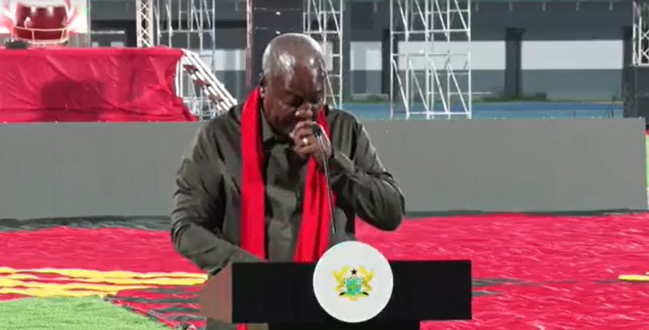
President John Mahama announced the initiative during a durbar in the Daffiama-Bussie-Issa District as part of his two-day Resetting Ghana Tour of the Upper West Region.


He said the kiosks would provide basic outpatient services, including health screening and consultation, while being digitally linked to district hospitals to enable patients to access doctors through telemedicine.
Government is partnering with the Ghana Private Road Transport Union (GPRTU) to establish some of the kiosks at lorry stations.
President Mahama said the initiative would particularly help screen commercial drivers for conditions such as hypertension and other non-communicable diseases that may go undetected.
He warned that an untreated health condition affecting a driver while behind the wheel could endanger the lives of the driver, passengers and other road users.
The President urged Ghanaians to undergo regular health screening, particularly for blood pressure and blood sugar, stressing that early detection could prevent serious illness and reduce the cost of treatment.
He said the health kiosks form part of the government’s wider Free Primary Healthcare programme, which combines preventive and curative services.
The programme is already operating in 135 districts, with the remaining 15 districts in the first phase expected to be covered by the end of the year. Government plans to extend it to all 261 districts by the end of 2028.
President Mahama said the programme was also designed to reach people who rarely visit health facilities because of distance or other barriers.
He cited the case of an elderly man who, according to a doctor involved in the programme, had reportedly gone 54 years without visiting a health facility.
The President said many people in such communities depend on herbal remedies or simply endure illnesses because healthcare facilities are too far away.
Under the Free Primary Healthcare programme, health workers will therefore visit homes to screen residents and provide basic services.
More than 25,000 pieces of medical equipment have already been distributed to support the initiative, with another 12,000 expected.
The President said the government was also providing motorcycles, tricycles and diagnostic kits to enable health workers to reach communities and conduct home-based screening.
He stressed that the focus was not only on treating illnesses but also on preventing them through early detection and healthier lifestyles.
President Mahama said bringing healthcare to markets, transport terminals and homes would help ensure that people receive medical attention before minor conditions develop into serious and costly illnesses.