
By F.E. Amanor
A Strategic Intelligence Failure? Is there someone who is to carry the blame?
“Nature does not repeat its warnings because it has forgotten. It repeats them because we have.”
During the yearly rainy season, my beloved country Ghana receives the same intelligence warning. Yet, we respond as though it arrived without notice.
Why is Ghana surprised when the rains fall?
I want to believe that there is something almost spiritual, or do I dare say ritualistic, about the rainy season in Ghana.
As always, the dark clouds gather over the Akwapim-Togo Ranges and can be seen stretching across the eastern horizon of Accra. Without warning, heavy rains descend upon the capital. Traffic and all forms of movement grind to a halt. The famous Odaw River bursts beyond its banks. The usual suspected flood-prone areas, which include parts of Kaneshie, Alajo, Adabraka, Weija, Tetegu, Ashaiman, Tema and several low-lying areas immediately become inundated. Television and radio stations are quick to interrupt regular programming with images of submerged vehicles, stranded commuters, collapsed walls and frightened residents wading through chest-high floodwaters in search of their personal safety. Social media is not left out, quite literally, with posts of videos showing flooded streets, homes, torrents carrying away household belongings, market stalls and, sometimes tragically, human lives that have been lost.
The start of yet another familiar ritual.
Government officials as usual are seen visiting affected individuals and communities and announce emergency interventions. Opposition politicians leave no stone unturned in accusing the government of incompetence. Government PR teams are quick to point to climate change, unprecedented rainfall or inherited planning challenges. The civil engineers blame poor drainage systems. Environmentalists point to wetlands that have disappeared beneath concrete. Citizens blame Metropolitan, Municipal and District Assemblies (MMDAs) for failing to desilt drains, while the assemblies point fingers at indiscriminate dumping of refuse and unauthorised developments. Everyone points. Nobody ducks. Nobody gives a hoot. The cycle continues.
Then the rains stop eventually. The floodwaters recede. Life slowly returns to normal. Until the next rainy season, when, as though trapped in an endless national replay or evil cycle, the same roads flood, the same communities suffer, the same official statements are issued and the same promises are repeated.
Perhaps the greatest tragedy of Ghana’s flood crisis is not that floods occur, but that they continue to occur in exactly the places where we have known for decades they would.
Should this surprise us? The uncomfortable truth is a capital NO! Studies over the period have identified the interaction between rapid urbanisation, inadequate drainage infrastructure, encroachment upon waterways, weak enforcement of planning regulations and increasing rainfall variability as the principal drivers of urban flooding in Accra. It is very important to note that these factors are neither sudden nor unknown. They have been consistently known by government agencies, researchers and international organisations over several decades (Amoako and Frimpong Boamah, 2015; Douglas et al., 2008; Karley, 2009; UNDRR, 2015). The challenge confronting Ghana is less one of information scarcity than of translating available knowledge into sustained policy action.
Year in, year out, the country pretends to be shocked by events that are, by every reasonable measure, predictable. This then raises a very simple and fundamental question that extends beyond engineering, meteorology, urban planning or climate science: how does Ghana as a nation repeatedly fail to prevent disasters that it already knows are coming?
Ghana’s recurring floods are not simply environmental disasters nor failures of infrastructure or urban planning. They represent something much deeper and far more consequential: a strategic intelligence failure.
Strategic Intelligence: Way more Than Spies and Secrets
People hear the word “intelligence” and they immediately think of people in black suits, dark sunglasses, spies, surveillance, covert operations and national security agencies. Yet within the discipline of International Security and Intelligence, strategic intelligence has a much broader and more profound meaning.
Strategic intelligence is the systematic process of collecting information, analysing trends, anticipating future developments, informing policy and enabling timely decision-making. Its ultimate purpose is not merely to respond to crises. It is to prevent foreseeable crises from becoming national disasters.
In military operations, strategic intelligence enables commanders to understand terrain before troops move. In public health, it allows governments to prepare for disease outbreaks before hospitals become overwhelmed. In economic policy, it helps decision-makers anticipate market shocks before they trigger financial instability. The same principle applies, with equal force, to floods (Kent, 1949; Hulnick, 2006; Lowenthal, 2022).
From Strategic Intelligence to Strategic Flood Intelligence
This write-up therefore introduces the concept of Strategic Flood Intelligence (SFI): the systematic collection, integration, analysis and application of environmental, meteorological, hydrological, geospatial, engineering, governance and behavioural information to anticipate flood risks, guide policy decisions and reduce national vulnerability before disasters occur.
Strategic flood intelligence therefore differs from conventional disaster management in one fundamental respect. Disaster management often begins after hazards have materialised. Strategic Flood Intelligence begins long before rainfall occurs. It asks not simply how governments should respond to floods, but why societies repeatedly allow foreseeable hazards to become national emergencies despite possessing the information necessary to prevent them.
Viewing it through this lens, Ghana’s recurring floods reveal a paradox. The challenge is not an absence of information. Rainfall forecasts exist. Hydrological models exist. Flood hazard maps exist. Planning regulations and environmental laws are present. The intelligence is also available. The recurring failures therefore lie in transforming that intelligence into timely policy, consistent enforcement and sustained political action.
A nation demonstrates strategic intelligence not by the efficiency of its emergency response after floods, but by its ability to act upon available information before the rains begin.
Measured against this standard, Ghana’s annual floods expose not a shortage of information but a persistent inability to convert information into sustained action. The intelligence has always existed. The rainfall patterns are known, and the flood-prone communities are also very well known. The drainage deficiencies are known, the wetlands that have disappeared beneath concrete are known, the illegal developments are known and the vulnerabilities are also known. What has been missing is not intelligence. What has been missing is the strategic application of that intelligence.
Before independence, the intelligence was there.
One of the major misconceptions surrounding Ghana‘s flood problem is the belief that it is a modern phenomenon brought about solely by climate change. No, it is not.
Long before Ghana gained its independence from British colonial rule in 1957, the colonial planners observed that Accra’s physical geography required careful settlement planning. So, drainage channels were incorporated into early layouts because the city occupied a low-lying coastal plain intersected by rivers, streams, wetlands and lagoons. They knew very well that rainfall descending from the Akwapim hills would eventually find its way through natural drainage systems into the Atlantic Ocean.
Interestingly, even before these colonial surveyors arrived with their contour maps and engineering instruments, the indigenous Ga people had already developed their own sophisticated understanding of the landscape. Their intelligence was not stored in government archives. It was embedded in language. It was preserved in memory. It was reflected in the names they gave the land itself.
When the land kept warning us
Long before Ghana established the Ghana Meteorological Agency, the Hydrological Services Department or even introduced Geographic Information Systems (GIS), local communities had already developed their own sophisticated understanding of their environment. Through generations of careful observation, they learnt how rivers behaved during the rainy season, where water naturally accumulated, which areas remained dry and where settlements could be established with minimal environmental risk.
This knowledge was not documented in engineering manuals or scientific journals. Instead, it was encoded in language, oral tradition and the names given to places. In many respects, our ancestors were the country’s first environmental intelligence analysts, and they worked without a single spreadsheet.
Perhaps one of the earliest flood hazard maps of Accra was never drawn on paper. It was spoken into existence through the names our ancestors gave the land.
A widely accepted Ga derivation, Lɛ-gon, means “on top of the hill”. It is hardly surprising that the University of Ghana and its environs sit on a relatively elevated terrain where natural drainage is generally more effective than in surrounding low-lying communities. The name itself reflects an appreciation of topography that predates modern surveying equipment by centuries.
Now, let’s consider Dzorwulu, traditionally understood to mean “deep valley”. Valleys are natural drainage corridors that collect runoff water from surrounding higher ground and direct it towards rivers, lagoons or the sea. Clearly, a valley is not merely an empty space awaiting development; it is part of the landscape’s natural drainage infrastructure. Roads, houses and commercial buildings may alter the appearance of such terrain, but they can never change the basic laws of hydrology. When heavy rains fall, water seeks the lowest available path, just as it has always done from the time of creation of the universe.
The name Dzorwulu was more than a geographical description. It was an environmental warning.
The caution is striking; the names survived, but the intelligence embedded within them did not.
As the country modernised, it embraced concrete, asphalt, satellite imagery and engineering technology. Yet somewhere along the way, the people chose to ignore the environmental wisdom that had guided settlement patterns for generations. Today, what do we see? Flood hazard maps confirm what indigenous communities already knew centuries ago. The difference, however, is that modern science expresses the information through contour lines and GIS layers, while our forefathers communicated the same intelligence through language, observation and lived experience. The tragedy is not that we lacked knowledge. The tragedy is that we stopped listening to it.
The Language of the Landscape
The environmental intelligence preserved in indigenous place names extends far beyond Legon and Dzorwulu. Across Accra, many traditional Ga names describe not merely locations but the physical character of the landscape itself. Oral history states that these names functioned as practical guides on our environments, helping communities understand where water accumulated, where soils were unstable and where settlement required some level of caution.
A typical example is Shiashi. It is traditionally understood to mean “under sand,” reflecting the sandy nature of the terrain. Korle Bu has long been interpreted as “the pit of the Korle,” describing the depression surrounding the Korle water system. Fa-no-fa is derived from the Ga expression Fa no fa, referring to deep water, an indication that the area historically formed part of a waterlogged environment.
Clearly, these names demonstrate that generations of the local inhabitants carefully observed their environment and embedded those observations within their language. Oral history functioned not merely as cultural heritage but as an environmental intelligence system as well, transmitting practical geographical knowledge across generations. Modern Accra inherited these names but gradually detached them from the environmental realities they once described. Road signs, maps and names of localities preserved the words, even though urban development increasingly ignored the ecological intelligence contained within them. Maybe if this indigenous understanding of the terrain had been integrated into contemporary planning and land administration, many of today’s flood-prone developments might have evolved very differently.
The Mountains Never Lied
To get a better understanding of Accra’s floods, one must first understand Accra’s geography.
Greater Accra occupies a relatively low-lying coastal plain bounded to the north by the Akwapim-Togo Range, including the Aburi Hills, and to the south by the Gulf of Guinea. This therefore means that every significant rainfall event over the capital sets in motion a natural hydrological process that has existed long before the first colonial maps were drawn.
Rainwater falling on the higher elevations of the Akwapim hills does not simply disappear into the ground; it flows downhill and enters streams, tributaries and rivers. It converges within drainage basins. Eventually, it finds its way through systems such as the Densu River, the Odaw River, the Kpeshie drainage basin and other wetlands before reaching the Atlantic Ocean. This is not a flaw in nature, but rather it is how nature is designed to function.
As it is widely known, water obeys gravity with consistency. It follows the path of least resistance and does not recognise political boundaries nor respects property lines. It simply moves according to the laws of physics.
That is why understanding the terrain marks the beginning of strategic intelligence. No intelligence analyst would ignore the geography of an operational environment before planning an operation. Yet for years and counting, urban development in parts of the Greater Accra has too often gone ahead as though rivers could be redirected indefinitely, valleys permanently reclaimed and wetlands converted into estates without consequence. Nature has never accepted that assumption. Every rainy season, it quietly disproves it.
When Nature’s Drainage System Became Our Housing Estate
One of the least appreciated aspects of Accra’s flood crisis is the role played by wetlands. They are most often mistaken as idle, swampy land waiting to be reclaimed for development without knowing that they are actually among nature’s most efficient flood-control systems. Acting like giant sponges, wetlands temporarily store excess stormwater, slow down runoff, recharge groundwater and reduce downstream flooding. They are not wastelands; they are critical infrastructure that has been provided to mankind absolutely free of charge by nature.
Historically, Accra was surrounded by an interconnected network of wetlands, lagoons and floodplains that performed precisely this function. The Densu, Sakumo Ramsar Site, Kpeshie Lagoon, Korle Lagoon and smaller marshlands like what we had behind the Ghana International Trade Fair site absorbed seasonal runoff long before concrete drains and culverts existed.
Over time, what do we see? Many of these natural buffers have been filled, fragmented or built upon in the name of urban expansion. Gated communities, commercial developments, roads and industrial facilities have gradually replaced ecosystems that once protected the city from flooding. In effect, what this means is that Ghana has spent years dismantling and destroying its own natural flood defence system. Every wetland reclaimed for development represents more than an environmental loss. It represents a reduction in the city’s capacity to absorb rainfall. Every floodplain occupied by concrete displaces water that must eventually find another route. Interestingly, that route passes through homes, markets, schools and businesses.
The rains are not creating a new reality. They are merely reclaiming old pathways.
Tse-Addo: A Wetland Within Living Memory
The transformation of Ts3-Addo demonstrates how quickly environmental intelligence can disappear when landscapes change faster than collective memory.
According to long-standing local accounts, Ts3-Addo, not so long ago, was once an estuarine wetland forming part of the wider Kpeshie Lagoon system. The area supported cattle grazing and the cultivation of crops by a well-known Akwapim farmer affectionately referred to as Ts3 Addo (Father Addo), from whom the area is believed to derive its name. Not far away, the area also contained the African Lake, situated behind the Trade Fair Centre, a popular recreational space where residents gathered to fish, patronise food vendors and socialise at drinking spots along its banks. The lake reportedly derived its name from its resemblance to the outline of the African continent.
More than simply scenic, the lake and surrounding wetlands formed part of Accra’s natural flood retention system. Stormwater flowing from the Aburi-Akwapim highlands accumulated within these wetlands before gradually making its way through the Kpeshie Lagoon into the Gulf of Guinea.
As demand for land increased, large sections of the wetland were progressively filled and subdivided for residential and commercial development. In replacing wetlands with concrete, the city did not eliminate the water. It merely eliminated the space where the water had always been expected to go. The recurrent flooding experienced in parts of the area today is therefore not evidence that nature has changed course. It is evidence that society has altered the landscape while expecting hydrology to behave differently.
Environmental Intelligence Amnesia?
Perhaps one of the most overlooked dimensions of Ghana’s flood crisis is what might be described as environmental intelligence amnesia: the gradual loss of collective memory regarding how the landscape naturally functions.
For generations, communities understood which lands were suitable for farming, settlement and commerce and which were better left to rivers, wetlands and seasonal floodwaters. Today, many of those distinctions are non-existent. Commercial value increasingly outweighs environmental suitability. Floodplains become gated communities mostly for the elite in society. Wetlands become shopping centres. Watercourses become refuse dumps. Then, when the inevitable floods occur, we describe them as natural disasters rather than as the consequences of our decisions made over many years.
In intelligence studies, this is not merely a planning failure. It is a failure of memory. And a nation that repeatedly forgets what its own landscape has taught it is a nation destined to relearn the same lesson at an ever-increasing cost.
The Weija Dam Is Not the Villain
Every time that the Ghana Water Company Limited announces that it intends to spill excess water from the Weija Dam, anxiety spreads rapidly across parts of Weija and its immediate environs. Residents begin moving belongings onto higher ground. Businesses hurriedly relocate equipment. Social media is filled with warnings, speculation, criticism and, as is Ghanaian tradition, creative commentary where, almost instinctively, public attention turns towards the dam itself.
The question that needs to be asked is this: is the Weija Dam really causing the floods, or is it merely exposing weaknesses that have accumulated over decades?
The Weija Dam, constructed on the Densu River between 1974 and 1978, remains one of Ghana’s most important pieces of national infrastructure that supplies treated water to millions of residents within Greater Accra and parts of the Central Region. Like every reservoir in the world, however, it has engineering limits.
During periods of prolonged or exceptionally heavy rainfall, inflows into the reservoir increase substantially. If excess water is not released in a controlled manner, pressure on the dam structure rises, creating risks that no responsible engineer will ever ignore. Therefore, opening the spillway gates is not an act of negligence or wickedness but rather an act of protection. In strategic intelligence terms, the decision to spill the dam is not the failure. It is the response to a foreseeable hydrological condition. The real intelligence failure lies elsewhere.
The Densu River Never Changed Course. We changed its floodplain.
Long before modern Accra emerged, the Densu River had flowed towards the Atlantic Ocean for thousands of years. Its seasonal overflows nourished wetlands, replenished floodplains and maintained ecological balance across what are today some of the most densely populated parts of Greater Accra. Historically, floodplains performed exactly the function their name suggests: they accommodated floods.
However, modern urbanisation destroyed this relationship. Over several decades, extensive residential and commercial developments emerged along sections of the lower Densu Basin. Communities including Weija, Tetegu, Oblogo, Bojo and lower McCarthy Hill expanded rapidly as Accra’s housing demand intensified. Much of this growth occurred faster than floodplain management, drainage planning and land-use enforcement could keep pace. The consequence was entirely predictable. Areas that historically functioned as temporary flood storage zones gradually became permanent human settlements. The river did not become more aggressive. Its space became smaller.
A River Without Room
One of the most basic principles of hydrology is that every river needs room to breathe and function. Floodplains are not vacant spaces waiting to be occupied by human development; they are an extension of the river system itself. Under normal conditions, water remains within the river channel. But when extreme rainfall occurs, the floodplain serves as a natural overflow area, temporarily absorbing excess water before the river returns to its usual path.
The problem begins when human activities permanently take over these natural spaces. Once buildings and other structures occupy floodplains, the river loses the room nature provided for managing excess water. The consequences are familiar: water finds its way into homes, roads turn into waterways, schools become temporary shelters, and entire communities are pushed into crisis.
In many ways, Ghana has tried to bargain with the realities of hydrology. But nature does not compromise. When rivers are denied their natural pathways, they eventually reclaim them, often with devastating consequences and little warning.
When Engineering Meets Governance
The flooding linked to dam spillage cannot be viewed simply as an engineering challenge. At its core, it is also a governance issue one that forces Ghana to confront difficult questions that have remained unanswered for decades.
Why have developments been allowed in areas already known to be vulnerable to flooding? Have flood risk maps been properly considered in planning decisions? Have environmental impact assessments been effectively enforced? Have political influence and institutional weaknesses affected planning approvals? Were there opportunities to remove illegal structures before they became part of the problem?
These questions are uncomfortable because they shift attention beyond the dam itself. They demand an assessment of decisions made over many years, rather than focusing only on the immediate operational choices made during a flood event. Strategic intelligence reminds us that many disasters witnessed today are often the result of decisions taken yesterday. The waters released from the Weija Dam do not create these vulnerabilities; they expose weaknesses that already existed.
The biggest lesson from the Weija Dam is that infrastructure, no matter how advanced, cannot replace responsible governance. A well-engineered reservoir cannot fully protect communities where floodplains have been occupied, drainage systems have been neglected, wetlands have been destroyed and planning regulations are poorly enforced.
The dam is carrying out the role it was built to perform. The bigger question is whether Ghana’s planning institutions have fulfilled their own responsibilities. The waters from Weija do not create the country’s vulnerabilities, they reveal them.
The Anatomy of a Strategic Intelligence Failure
If intelligence is about identifying threats before they become disasters, then Ghana’s recurring flood situation presents a troubling reality. The danger is known. The evidence exists. The communities at risk have been identified. Seasonal rainfall patterns are understood. Yet the same disasters continue to happen with alarming consistency.
Ghana’s flood crisis is therefore not the result of one isolated failure. It is the outcome of several interconnected failures working together until what should be manageable rainfall becomes a national emergency.
Environmental Intelligence Failure
Every landscape carries its own natural intelligence. Mountains direct the movement of water. Valleys collect it. Wetlands absorb it. Lagoons store it. Rivers transport it. These features are not accidental; they form part of a natural drainage system shaped over thousands of years.
However, Ghana’s urban growth has often progressed as though these natural systems can easily be replaced with concrete. Floodplains have been transformed into housing developments. Wetlands have made way for commercial activities. Natural drainage routes have become dumping grounds.
When nature’s pathways are blocked, water does not disappear. It simply searches for another route, and increasingly, that route leads through people’s homes and communities.
Nature has not failed us. The failure lies in our inability to respect and understand how nature works.
Historical Intelligence Failure
Nations that successfully manage crises are those that learn from their past. Unfortunately, Ghana’s approach to flooding often suggests a failure to retain historical lessons. Major floods are frequently treated as isolated events rather than chapters in a long and repeated story.
From the devastating floods of 1936, to major floods in the 1960s and 1980s, the recurring urban floods of the 1990s, the June 3, 2015 disaster, and more recent incidents between 2022 and 2024, the pattern remains familiar.
Each disaster brings investigations. Each produces recommendations. Each creates promises of reform. Yet many of those recommendations have not been fully implemented.
As a result, every rainy season brings back conversations that should have been resolved years earlier. A nation that fails to learn from yesterday’s warnings risks repeating yesterday’s mistakes.
Planning Intelligence Failure
Ghana is not suffering from a complete lack of information. Flood risk maps exist. Hydrological studies exist. Environmental assessments exist. Planning laws and building regulations exist.
The bigger challenge has been the failure to consistently apply this knowledge when making development decisions.
Across Greater Accra and other rapidly expanding urban areas, construction has often moved faster than planning enforcement. Buildings have appeared on waterways. Roads have disrupted natural drainage channels. In some cases, political pressure has weakened efforts to enforce regulations.
Strategic intelligence only becomes useful when leaders are prepared to act on difficult information before a crisis occurs. When planning systems ignore warnings, disasters become more likely.
Institutional Intelligence Failure
Managing floods in Ghana requires cooperation among several institutions. The Ghana Meteorological Agency provides weather forecasts. The Hydrological Services Department monitors drainage systems and flood risks. The Water Resources Commission oversees water management. The Environmental Protection Agency handles environmental regulation. NADMO coordinates disaster preparedness and response, while Metropolitan, Municipal and District Assemblies are responsible for enforcing planning and sanitation regulations.
Each institution has an important role to play. The challenge is not only capacity but coordination.
Effective strategic intelligence depends on information moving smoothly between institutions and translating into collective action. Too often, however, agencies operate separately rather than as one coordinated system.
Warnings are issued. Reports are prepared. Meetings take place. But implementation remains fragmented.
Floodwaters do not recognise institutional boundaries, and neither should flood management efforts.
Behavioural Intelligence Failure
Perhaps the most difficult part of Ghana’s flood challenge is the role of human behaviour. It is easy to place all the blame on government. It is politically convenient to criticise assemblies. It is understandable to highlight poor drainage systems and inadequate infrastructure.
But every rainy season also reveals another reality: plastic bottles carried through flooded streets, sachet water wrappers blocking drains, household waste dumped into gutters, buildings constructed on waterways and illegal structures defended when authorities attempt removal.
The uncomfortable truth is that government is not responsible for every plastic bottle thrown into a drain. Government does not dump every bag of rubbish into water channels. Government does not purchase every piece of land located in flood-prone areas.
Some of these actions are individual choices.
Behavioural intelligence is about understanding how everyday decisions contribute to wider consequences. When communities continue practices that increase collective risk, they become part of the problem they later suffer from.
This is not about placing equal blame on everyone. It is about acknowledging that solving the flood crisis requires shared responsibility.
Political Intelligence Failure
Flood management often requires decisions whose benefits may not be immediately visible within one political term. These include relocating vulnerable settlements, protecting wetlands, removing illegal structures, restricting development in flood-prone areas and investing heavily in drainage systems.
Such decisions are often politically difficult because their rewards may only become clear years later. This creates the temptation to delay action.
But strategic intelligence requires leaders to make difficult choices today to prevent tomorrow’s disasters.
Political courage is therefore a critical part of building resilience. When long-term national interests are repeatedly sacrificed for short-term political convenience, flood risks become embedded within institutions and eventually, those risks translate into repeated human suffering.
Learning Intelligence Failure
Perhaps the biggest failure of all is our inability to learn. Gathering information and analysing it are only part of strategic intelligence. What truly matters is whether those lessons shape future decisions and strengthen institutions.
Every flood should leave Ghana better prepared for the next one. Every disaster should lead to stronger systems and better policies. Unfortunately, that has not been our experience. Instead, the country’s flood history often feels like a recurring cycle rather than steady progress.
The reports are written. Recommendations are made. Public anger flares up. Promises are given. Then the rains return, another tragedy unfolds, another committee is formed, and another set of promises follows.
Individuals may have learnt from past disasters, but those lessons have not consistently been embedded within our institutions. Until learning becomes part of how our institutions operate, the cycle will continue.
When Every Warning Converged: The June 3 Disaster
The events of June 3, 2015, were far more than a flooding incident. They were the result of several warning signs and long-standing weaknesses coming together at the same time.
Heavy rainfall had already been forecast. The vulnerability of the Odaw Basin was well known. Poor drainage had been identified years earlier. Plastic waste had clogged major drains, while settlements had steadily expanded into flood-prone areas. Weaknesses in emergency planning were also no secret.
When the heavy rains finally arrived, they collided with all these existing vulnerabilities, producing one of the deadliest urban disasters in Ghana’s history.
June 3 did not reveal new dangers. It exposed the consequences of warnings that had gone unheeded for years.
Plastic, Choked Drains and the Price of Indiscipline
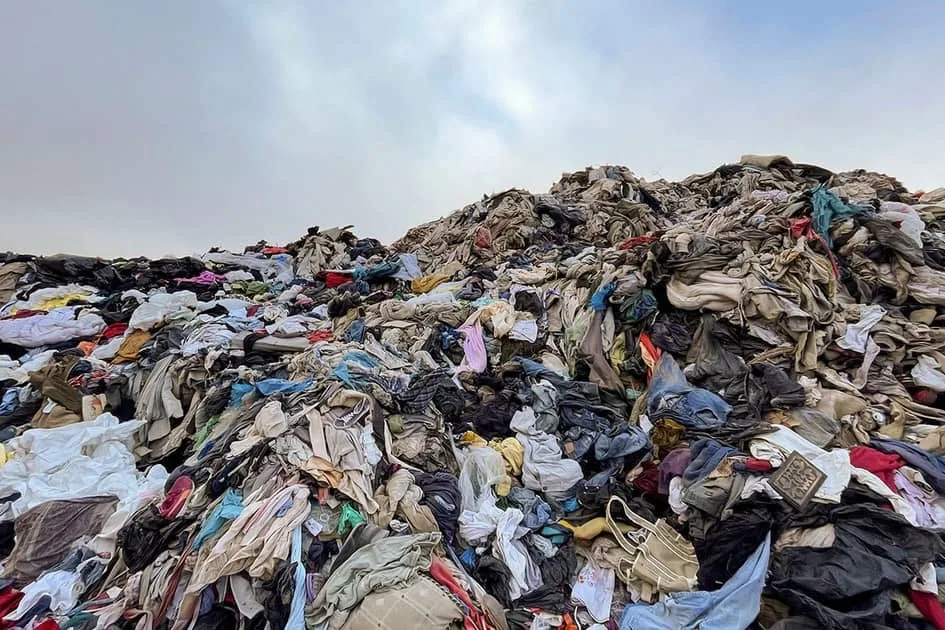
If there is one image that best captures Ghana’s recurring flood crisis, it is not flooded vehicles or collapsed buildings. It is the sight of raging floodwaters carrying what looks like floating islands of plastic waste; bottles, sachet water wrappers, takeaway containers, shopping bags, food packaging, old tyres and household refuse.
As floodwaters sweep through the streets of Accra, they also expose a problem that has been building quietly over many years. The drains did not become blocked because of a single afternoon’s downpour. They had been gradually clogged by countless acts of environmental neglect. The floods simply brought the problem into full view.
Every blocked drain reduces the city’s ability to channel stormwater away. A single plastic bottle trapped beneath a culvert slows the flow of water. A sachet wrapper caught on a drain grille increases pressure upstream. Over time, the drainage system reaches its limit, and the water looks for another route.
Too often, that route leads into people’s homes, businesses, schools and hospitals.
Water does not choose where to go. It follows the path that is left open to it.
Perhaps the most expensive plastic bottle in Ghana is not the one purchased from a shop. It is the one discarded into a drain. Its true cost is measured not in Ghana cedis but in flooded homes, disrupted businesses and lives lost.
Plastic Is No Longer Merely an Environmental Problem
For many years, plastic pollution has been viewed mainly as an environmental issue. Today, that view is no longer enough. Plastic waste has grown into a much bigger challenge, affecting environmental security, urban resilience, public health, economic activity and, ultimately, national security.
When plastic pollution contributes to the loss of lives, damages roads and other infrastructure, disrupts businesses, displaces communities, contaminates water bodies and forces government to spend more on disaster response, it goes far beyond a sanitation problem. It becomes a governance challenge that demands strategic attention. Ghana can no longer afford to treat it as just another environmental concern.
Should Ghana Ban Plastics?
Few environmental issues generate as much debate as the question of banning plastics. The answer, however, is yes but it must be done thoughtfully.
A blanket ban on all plastic products overnight would neither be realistic nor economically sound. Thousands of Ghanaians earn their living from the manufacture, packaging, transportation and sale of plastic products. Sachet water, in particular, remains an affordable and reliable source of drinking water for millions of households, especially in communities with limited access to piped water. It also provides income for thousands of traders across the country.
That said, the economic importance of plastics should not become a reason to delay action. A more practical approach would be to implement a phased national strategy to reduce plastic waste. Government can begin by gradually phasing out non-essential single-use plastics for which suitable alternatives already exist. Thin plastic shopping bags, plastic straws, disposable cutlery and expanded polystyrene food containers are obvious places to start.
At the same time, manufacturers should be encouraged through incentives to invest in biodegradable packaging and reusable alternatives. This is not about undermining business; it is about building a more resilient and sustainable future.
Beyond Desilting: Waste Collection Is Not Flood Prevention
After every major flood, public attention often turns to whether drains were desilted or whether waste management companies did enough. While desilting drains and collecting refuse remain essential parts of urban flood management, they cannot undo years of environmental degradation, weak enforcement of planning regulations and the continued encroachment on natural drainage channels.
Expecting sanitation contractors alone to solve a problem driven by poor land use, hydrology, weak governance and human behaviour is unrealistic. It also mistakes routine maintenance for long-term prevention.
Keeping drains clean is important, but lasting flood prevention requires much more. It demands better planning, stricter enforcement of regulations, protection of natural waterways and a collective commitment to responsible environmental practices.
Turning Waste into Wealth: Learning from Ghana’s Own ‘Koliba’
While conversations around waste management often focus on punishment and enforcement, Ghana already has examples of innovative solutions that deserve greater recognition. One such example is Koliba, a home-grown recycling initiative that encourages people to collect and return recyclable materials by offering them rewards.
The idea behind it is simple: people are less likely to throw away something they consider valuable. When plastic bottles are seen as a source of income rather than useless waste, more people will be motivated to collect and recycle them.
Waste that currently blocks drains and contributes to flooding can instead become a resource for industry, creating jobs while improving environmental sanitation. It is what economists describe as a win-win situation and what many Ghanaians might simply describe as making money from something that was once considered rubbish.
Government must begin to see recycling not only as an environmental measure but also as an economic opportunity. Supporting initiatives such as Koliba through tax incentives, logistical assistance, public procurement opportunities, community collection centres and partnerships with local assemblies could transform waste management from a financial burden into a productive national venture.
The goal should not only be to clear plastic waste from drains. It should be to create a system where throwing plastic away no longer makes economic sense.
From Moral Appeal to Legal Accountability
Every society that has achieved strong environmental discipline has done so through a combination of education and enforcement. Singapore did not become one of the world’s cleanest cities simply because citizens were taught about sanitation; its environmental laws were also consistently enforced.
Rwanda’s transformation in environmental management similarly reflects strong political commitment, public participation and strict enforcement of environmental regulations.
Ghana can adopt similar principles while adapting them to its own democratic and social realities. This approach is not entirely new. Many older generations remember the days of ‘Papa Tankasi,’ a term widely believed to have evolved from ‘Town Council,’ when officials inspected communities and ensured that households maintained clean surroundings. Others also recall periods when individuals who failed to keep their environment clean faced sanctions or fines.
Whether preserved through official records or community memory, these practices show that environmental responsibility has long existed within Ghanaian society. The challenge today is not creating a culture of environmental discipline from nothing, but restoring one that has gradually weakened over time.
Metropolitan, municipal and district assemblies should consistently enforce sanitation by-laws through the following:
• fixed spot fines for littering and illegal dumping;
• mandatory community service for repeat offenders;
• prosecution of commercial entities that dispose of waste unlawfully;
• enforcement of laws on construction activities that obstruct drains or waterways; and
• regular inspections of high-risk flood zones before the onset of the rainy season.
Enforcement, however, must be fair, transparent and free from political influence. Environmental laws and permits must apply equally to everyone from the market trader and homeowner to multinational companies and politically connected developers.
Selective enforcement weakens public confidence, undermines justice and reduces the effectiveness of environmental regulations.
A Culture of Environmental Citizenship
Perhaps the most lasting solution to Ghana’s environmental challenges lies not only in laws and policies but also in culture.
Conclusion: Beyond the Floodwaters
Every rainy season, the debate follows a familiar script. We ask why the drains were not desilted. We ask why NADMO and the MMDAs failed to act. We ask why emergency services arrived late. We ask why more lives were lost. These are important questions. But they are not the first questions we should be asking.
The first question should be: why are we still surprised?
Strategic intelligence teaches that surprise is acceptable only when an event is genuinely unforeseen. Ghana’s floods do not meet that threshold. We know the rainfall seasons. We understand the geography of Greater Accra. We know the pathways of the Odaw and Densu Rivers. We understand the role of the Aburi-Akwapim Ridge in generating runoff into the capital. We know the ecological importance of wetlands such as the Densu Delta and Sakumo Ramsar Sites. We know that valleys collect water, that floodplains overflow and that blocked drains impede the movement of stormwater. Above all, we know the communities that are most vulnerable. Yet we continue to respond to predictable events as though they were unexpected emergencies. That is not merely a planning failure. That is a strategic intelligence failure.
Responsibility is shared, but it is not equal. Those entrusted with public authority bear a greater obligation, because leadership is measured not by the management of crises but by their prevention.
This article has argued that Ghana’s flood crisis cannot be explained solely by heavy rainfall, climate change, inadequate drainage infrastructure or rapid urbanisation. These are important factors, but they do not fully explain why the same mistakes are repeated decade after decade. The deeper explanation lies in the interaction of seven interconnected failures: environmental, historical, planning, institutional, behavioural, political and learning intelligence failures. Together, these have created a national culture that reacts to floods rather than preventing them.
Governments must demonstrate the political courage to enforce planning regulations without fear or favour. Parliament must provide sustained oversight and adequate investment in resilient infrastructure. MMDAs must enforce building regulations and sanitation by-laws consistently. Traditional authorities must exercise greater diligence in land allocation. Developers must recognise that commercial opportunity does not justify environmental destruction. Manufacturers must assume greater responsibility for the lifecycle of plastic products. Citizens must understand that every sachet of water, every plastic bottle thrown onto the streets or into a drain and every illegal structure erected within a waterway increases risks not only for themselves but also for their neighbours.
We all carry responsibility. But not equally.
No government can permanently solve a problem that society continually recreates. Flood resilience is therefore not merely an engineering project. It is a national culture. It requires discipline as much as drainage, foresight as much as funding and enforcement as much as education. Most importantly, it requires a fundamental shift in how Ghanaians understand the relationship between people and place.
Long before flood hazard maps, our ancestors recognised the intelligence contained within the landscape. Somewhere along our journey towards modernity, we retained the names but neglected the wisdom behind them. Perhaps the time has come to recover that wisdom.
As Ghana continues to urbanise and climate variability increases, the cost of ignoring environmental intelligence will become even greater. Every wetland lost to development, every drainage channel obstructed, every floodplain occupied and every piece of plastic discarded into a gutter represents another layer of vulnerability waiting to be exposed by the next heavy rain.
The greatest lesson from Ghana’s flood history may be this: intelligence does not always arrive in classified reports or sophisticated forecasting models. Sometimes it is embedded in the names of our communities. Sometimes it survives in the memories of elders who remember wetlands that have disappeared beneath concrete. Modern science has confirmed much of what indigenous communities already understood: landscapes possess memory, and water seldom forgets its path.
Nature will continue to do what it has always done. The rains will fall. Water will flow downhill. Rivers will seek their floodplains. Wetlands will attempt to absorb excess runoff. The question is whether Ghana will finally learn to work with nature rather than against it.
Because the clouds do not conspire against us. The rivers do not betray us. The valleys do not deceive us. They simply remind us, year after year, that strategic intelligence is not measured by what we know.
It is measured by what we choose to do with what we know.
Until that changes, Ghana will continue to experience floods without surprise. Not because nature failed to warn us. But because we failed to listen.
About the Author
F.E. Amanor is a retired Infantry Military Officer of the Ghana Armed Forces and an experienced International Security practitioner whose career has spanned intelligence, military policing (provost), investigations, protection strategies and field security operations. His article focuses on intelligence, security governance and emerging non-traditional security threats. The views expressed in this article are his own.