By: Nana Karikari, Senior Global Affairs Correspondent
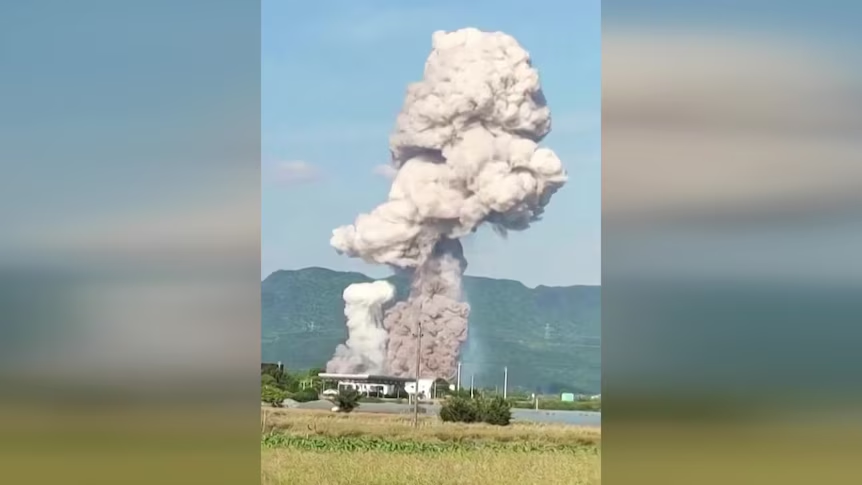
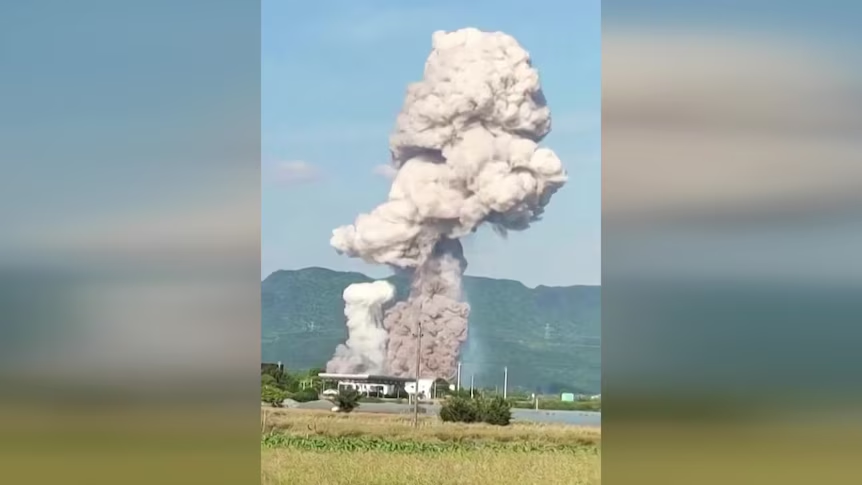
A powerful explosion tore through a fireworks manufacturing facility in central China on Monday afternoon, killing at least 21 people and leaving dozens more injured. The blast occurred at approximately 4:43 p.m. local time.(08:43 GMT) at the Liuyang Huasheng Fireworks Manufacturing and Display Company, located in a mountainous rural stretch of Hunan province.
Immediate Aftermath and Casualties
The force of the explosion was felt several kilometers away, reportedly shattering windows and doors in neighbouring villages. State broadcaster CCTV released aerial drone footage Tuesday showing a landscape of scorched earth and smoldering ruins where factorybuildings once stood. White smoke continued to billow from the site as rescue teams navigated collapsed structures and debris.
Local health officials confirmed that 61 people were transported to nearby hospitals with varying degrees of injuries. Rescuers described a scene of “massive destruction,” with many of the facility’s workshops reduced to rubble.
Emergency Response and Search Operations
More than 480 emergency personnel were dispatched to the site, organized into five specialized search and rescue teams. To mitigate the risk of secondary explosions, firefighters utilized water cannons for “spraying and humidification” to stabilize the area. Three specialized rescue robots were also deployed to assist in locating victims within the unstable remains of the plant.
Authorities established a three-kilometer control zone around the factory, citing the presence of two nearby warehouses containing black powder. Fearing further blasts, officials successfully evacuated hundreds of residents from the immediate danger zone to temporary shelters.
Government Reaction and Accountability
Chinese President Xi Jinping issued a formal directive calling for “all-out efforts” to treat the wounded and locate any individuals still missing. According to the state news agency Xinhua, Xi also ordered a thorough investigation into the cause of the disaster, demanding that “those responsible be held accountable.”
In the hours following the blast, police in Liuyang apprehended senior executives from the Huasheng Fireworks company. While the specific cause of the ignition remains under investigation, the Ministry of Emergency Management has dispatched a team of national experts to oversee the probe and guide ongoing relief efforts.
The Global Fireworks Hub
Liuyang is often referred to as the fireworks capital of the world. The region produces roughly 60 percent of the fireworks sold within China and approximately 70 percent of global exports. This dominance comes with a history of tragedy, as the industry has long struggled with balancing high production demands with stringent safety protocols.
Changsha Mayor Chen Bozhang noted that while the primary search operations have concluded, the process of identifying victims remains ongoing. This latest disaster follows a series of recent industrial accidents in the country, including a firecracker shop explosion in Hubei province earlier this year that claimed 12 lives.
Implications for Ghana and African Markets
The explosion in Liuyang carries significant weight for West African nations, particularly Ghana, which relies heavily on Chinese imports for festive and cultural celebrations. As a primary source of pyrotechnics for the African continent, a production halt in Hunan could lead to market shortages and increased costs for local vendors in Accra and Lagos. Furthermore, the disaster serves as a sobering reminder for African industrial regulators regarding the importance of strict zoning laws for hazardous materials, echoing concerns often raised in rapidly industrializing African urban centers.
Environmental and Economic Consequences
The environmental impact of the blast remains a significant concern for local agricultural communities. Experts warn that the combustion of massive quantities of potassium nitrate and sulfur can lead to immediate air quality degradation and potential soil acidity in the surrounding valley. Economically, the temporary suspension of nearby facilities for safety inspections is expected to disrupt the global supply chain ahead of the peak export season.
A Critical Balance for Safety
This tragedy underscores the persistent challenge of enforcing modern safety mandates within traditional manufacturing hubs. While China has implemented stricter industrial regulations over the last decade, the volatility of pyrotechnic production continues to test the limits of local oversight. Moving forward, the government faces the delicate task of preserving a vital cultural and economic industry while ensuring that the cost of global celebration is not measured in human lives.