By: Benjamin Nii Nai Anyetei
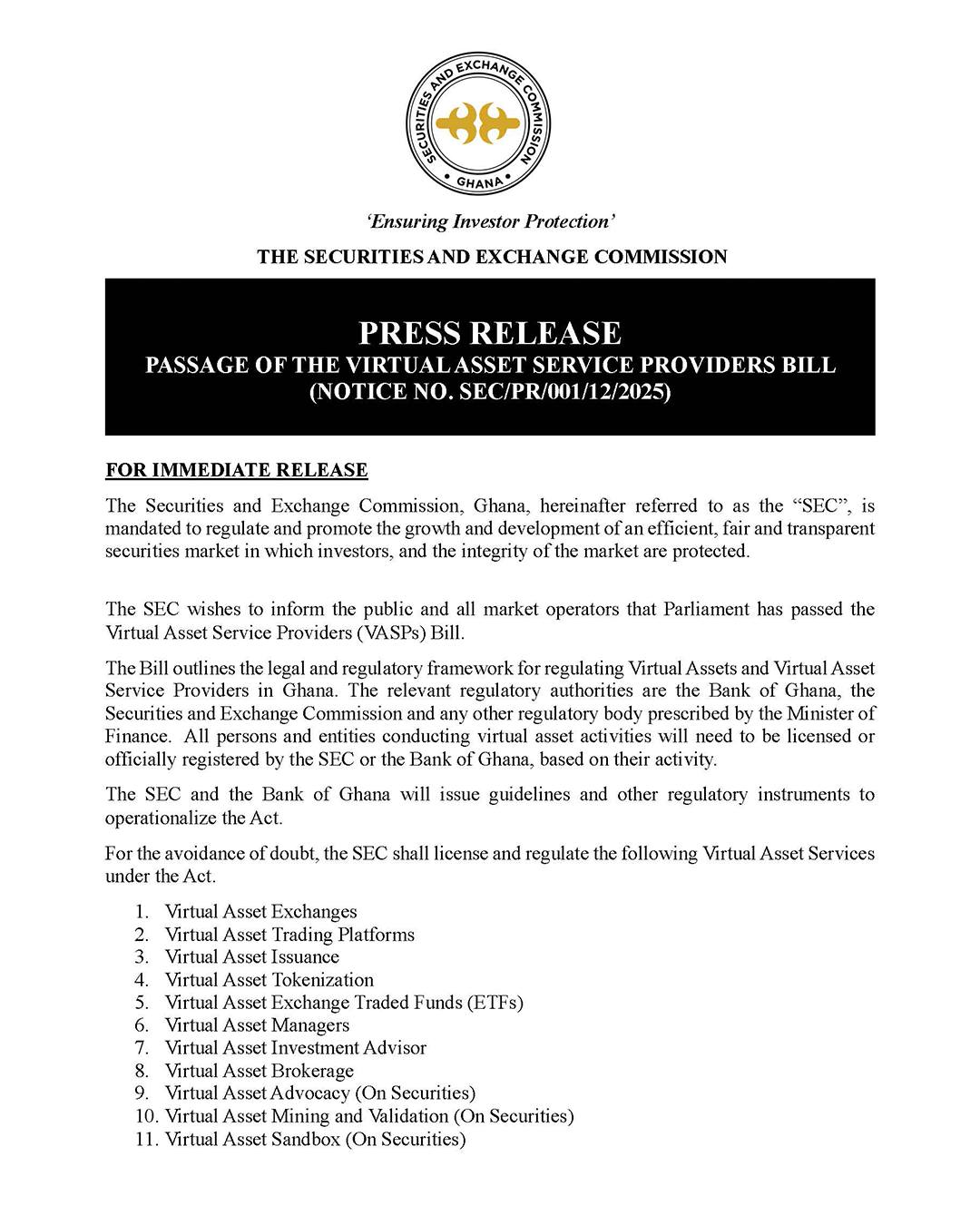
President John Dramani Mahama has signed the Virtual Asset Service Providers (VASP) Bill into law, formally bringing Ghana’s digital asset sector, including cryptocurrencies; under a comprehensive and regulated legal framework.
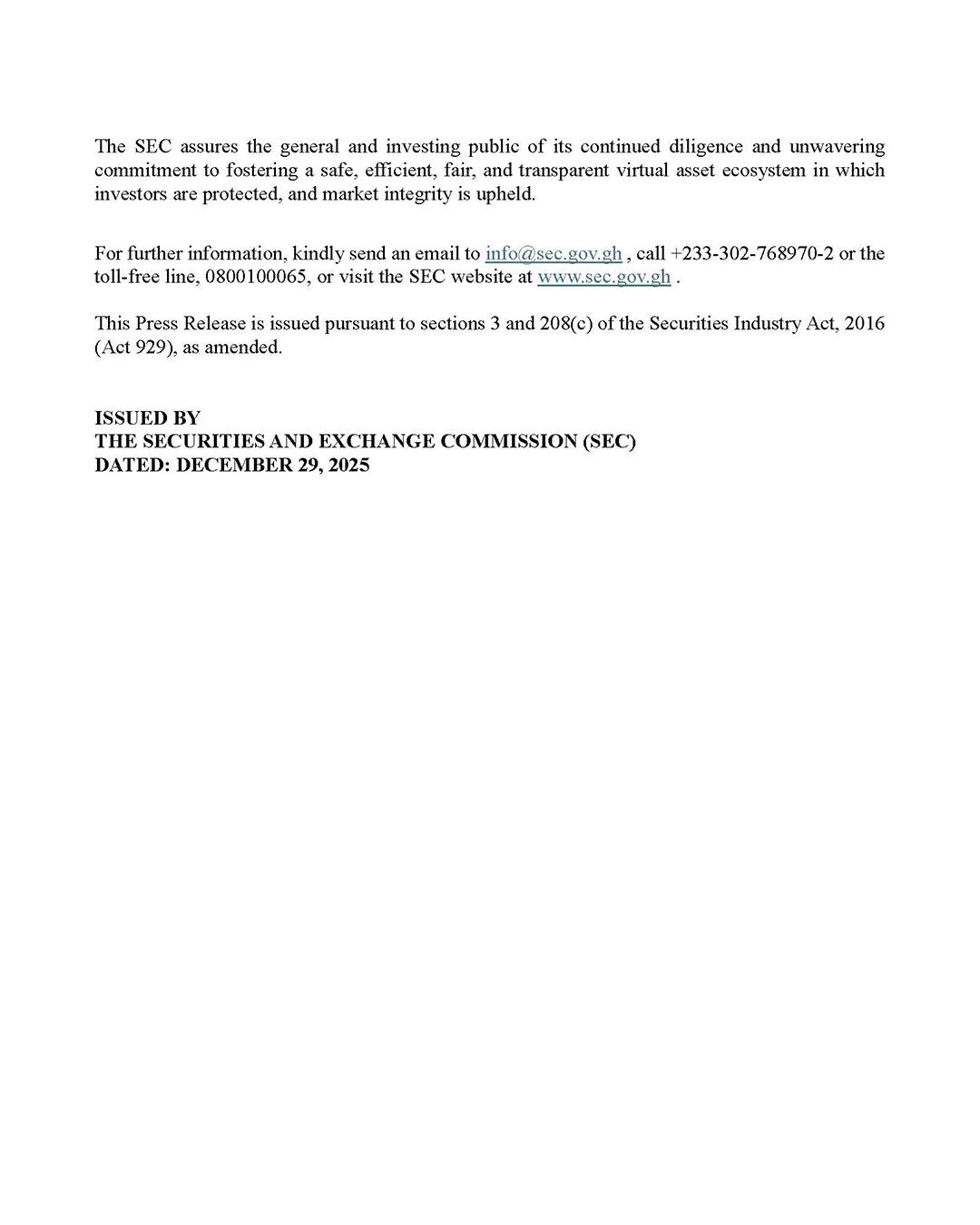
The assent, announced on December 30, 2025, was confirmed by the Deputy Director‑General of the Securities and Exchange Commission (SEC), Mensah Thompson, in a statement shared on social media following Parliament’s approval of the bill after extensive deliberations.
What the Law Does and Why It Matters
The new law provides a clear legal framework for the use, trading, and provision of services related to virtual assets, effectively bringing activities that were previously in a regulatory grey zone into formal oversight. This includes the licensing and regulation of cryptocurrency exchanges, wallet providers, token issuers, trading platforms and other virtual asset service providers (VASPs).
Under the law, Cryptocurrency trading is now legal in Ghana and must operate under regulated conditions, ending years of informal use without clear legal status. All entities involved in virtual asset activities must be licensed or registered with the appropriate regulator, either the Bank of Ghana (BoG) or the SEC, depending on the nature of the service.
The law aims to strengthen investor protection, market integrity and financial stability while supporting responsible innovation in the digital economy.
The Bank of Ghana will oversee activities related to payment systems, settlement services, and stablecoins.
The Securities and Exchange Commission will regulate market‑facing services such as exchanges, custodial wallet providers, token issuance and investment‑related activities.
Both regulators are expected to issue guidelines and regulatory instruments in early 2026 to operationalise the Act, detailing licensing requirements, capital and risk‑management standards, anti‑money‑laundering (AML) and counter‑terrorist financing (CFT) controls, and other compliance obligations.

Growth and Rationale Behind the Law
Ghana’s rapid adoption of digital assets underpinned the push for regulation. As of November 2025, Ghana recorded over US$10 billion in cryptocurrency transactions, up significantly from roughly US$6 billion in 2024, highlighting the growing scale of crypto activity in the economy.
Officials have said that the new law aims to bring transparency and accountability to the virtual asset market, protect consumers, mitigate fraud and money‑laundering risks, and integrate the sector into the formal financial system.
The passage and signing of the VASP Act received bipartisan support in Parliament and backing from key institutions including the Presidency, the Ministry of Finance, the Bank of Ghana and the SEC, as well as market operators and crypto exchanges. Ghana’s regulatory move places it alongside other African countries such as Kenya and Nigeria, which have also introduced clear frameworks for crypto regulation as part of broader efforts to align with global digital finance trends and expand financial inclusion.
With the law now in force, VASPs operating in Ghana must prepare for licensing and compliance, mapping their activities to the new regulatory regime. Regulators will soon issue detailed rules on licensing procedures, capital and solvency requirements, customer protection standards, and reporting obligations.
The regulatory clarity is expected to boost investor confidence, attract responsible innovation, and promote Ghana’s position as a regional hub for regulated digital asset services.

READ FULL STATEMENT HERE