
By Jennifer Nerkie Kenney
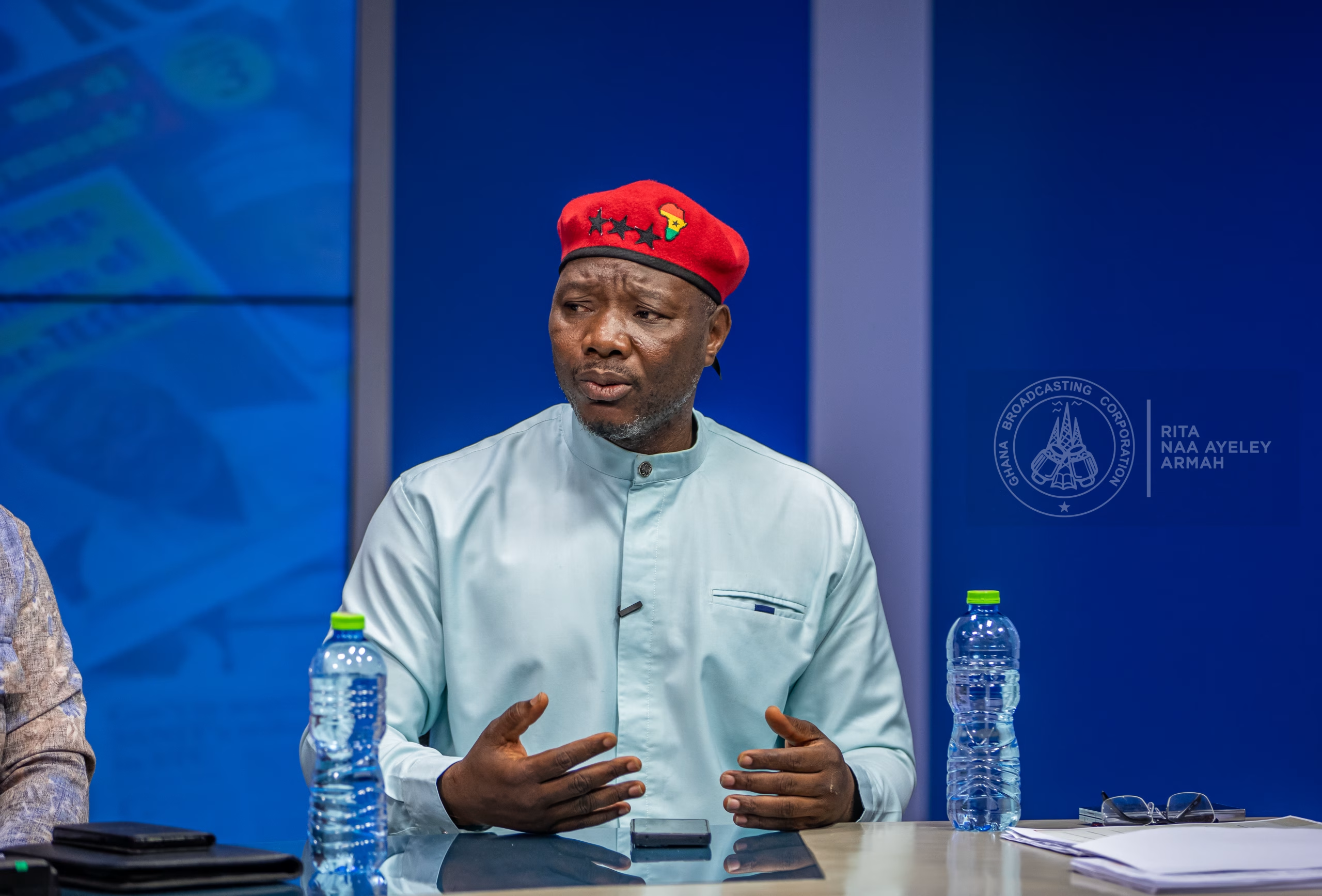
Leading Member of the People’s National Convention (PNC), Bernard Mornah has taken a swipe at the New Patriotic Party (NPP) over its public posture on a yet-to-be-delivered court judgement relating to a disputed parliamentary seat in Kpandai.
Speaking on the matter in an interview on GBC’s FOCUS, Mr. Mornah stressed that no one can accurately state the contents of a judgement that is yet to be delivered, adding that it is speculative and inappropriate for any political party to make conclusions ahead of time. He noted that while parties have the right to express their intention to appeal, such a move must be grounded in an actual ruling and not assumptions.
“First and foremost, the judgement is not out. I’m told the judgement will be out on Friday. So what went into the decision of the judge can only be imagined; that cannot be stated in fact,” Mornah said.
“You can indicate an intention that you disagree and that you will file for an appeal, but the evidence upon which you will file your appeal is not yet available,” he added.
The controversy stems from a long-running legal battle over the declaration of an MP following the 2024 parliamentary elections. The disputed seat, which was contested between the NPP’s Matthew Nyindam and the NDC candidate, Daniel Nsala wakpal has been in court for nearly a year following protests after the Electoral Commission’s declaration.
Mornah noted that the NDC candidate had pursued the case consistently for about 10 to 11 months and described the legal route as legitimate. However, he expressed concern that prolonged court cases undermine democratic representation when someone who may not be the rightful MP occupies the seat for almost a full parliamentary term.
“The guy followed the matter for almost 10 months, 11 months. Eventually the court had to reason and pass its judgement,” he said.
“The person who might have won would have been denied that service, and when you come to Parliament you will stay for the life of the Parliament,” Mornah stated.
Drawing on previous precedents, Mornah referenced the Rebecca Oteng–Isaac Adongo case to illustrate how delayed judicial decisions often create financial and governance challenges for the state. He argued that the courts must expedite election-related cases to avoid unnecessary expenditure and governance confusion.
According to him, if a sitting MP eventually loses the case, the court does not usually order a refund of salaries already paid, yet the rightful winner would also have lost the opportunity to serve. He warned that such situations amount to waste of public resources.
“Our courts must be ready to speed up so that these difficulties will not be created,” he stressed.
“Assuming at the end of the day this violation takes place and he is not supposed to be an MP, the court will not ask him to refund the money he has received,” Mornah added.
Mr. Mornah also criticised the NPP for what he described as selective respect for the judiciary, recalling how the party often urged opponents to seek redress in court when it suited them. He said the party’s recent posture, including holding a press conference before the judgement is delivered, sends the wrong signal to the public and puts unnecessary pressure on the courts.
He welcomed the NPP’s declaration that it respects the courts but questioned the timing of its press engagements, stressing that disagreement should only follow after the official ruling is released.
“If you did not believe in the efficacy and potency of the courts, how did you come by anything good court at all?” he asked.
“It is when you have the judgement that you can say we disagree. The judgement will come on Friday,” he emphasized.
On the political implications of the case, Mornah stated that the PNC is eager to secure parliamentary representation and will take any legitimate opportunity to return to Parliament. He dismissed claims that the party is unsettled by the legal uncertainties and insisted that electoral justice must prevail regardless of political advantage.
He further suggested that unresolved electoral disputes across multiple constituencies point to deeper systemic issues within the country’s electoral and judicial frameworks that must be addressed comprehensively.
“We are eager to go to Parliament, and any opportunity to be in Parliament we will take advantage of,” he said.
“I am saying that immunity is becoming predictable, and the whole system must be really looked at,” Mornah concluded.


