
By Sualah Abdul-Wahab
Peasant Farmers Association of Ghana (PFAG) has urged the government to engage more with members of the Association when formulating and implementing policies that affect them. Members of the Association are of the view that regular engagement with them will enable the government and other stakeholders to understand their critical needs and address them, leading to increased food production and ensuring food security in the country.
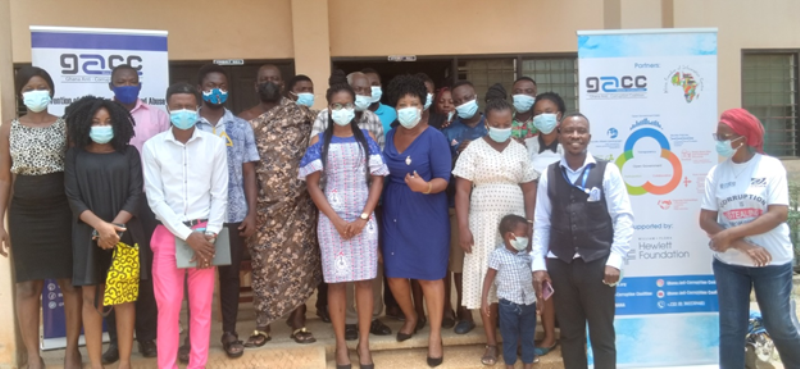
Programmes Officer of the Association, Dr Benjamin Sarfo, stated this when he addressed a multi-stakeholder platform meeting in Wa in the Upper West Region. The meeting, organized by PFAG with support from Star Ghana Foundation, sought to establish a formal platform for regular and structured dialogue among farmer groups, local assemblies, civil society organizations, private sector actors, and traditional authorities.
The platform will also create a mechanism for information sharing, feedback, and accountability in agricultural service delivery. Integrating smallholder farmers’ priorities and solutions into district-level planning and budgeting is part of the objectives of the platform.
Programmes Officer of PFAG, Dr Sarfo, said there is a disjoint between farmers and policymakers; as a result, farmers’ priorities are not properly tabled during policy formulation and implementation, thereby neglecting the needs of peasant farmers.
“A lot of things, you realize farmers themselves do not have much say, especially on input costs. So we invited some of the input dealers. The aggregators too have issues with the channels on how things are being done,” Dr Sarfo indicated.
He added that the purpose of this meeting is to establish a multi-stakeholder platform where these stakeholders will understand the challenges farmers are going through. It will afford farmers the opportunity to share some of the challenges they face with duty bearers such as the municipal assemblies, MoFA officials, and input dealers.
The Regional Focal Person of PFAG, Alhaji Salifu Amadu, told the meeting that the establishment of the platform is expected to get the district assemblies to prioritize the documented needs of smallholder farmers and budget for them. It should also lead to enhanced accountability and service delivery.
He said, “A functional mechanism enables farmer groups to hold duty bearers accountable for development progress and agricultural service quality.” He expressed hope that the Multi-Stakeholder Platform will institutionalize regular and constructive engagement among all actors, fostering shared understanding and coordinated action to address agricultural challenges.
Deputy Director in charge of Monitoring and Evaluation at the Department of Agriculture, Madam Rita Mumuni, reminded members of PFAG to take advantage of government flagship programmes such as Feed Ghana to enhance food production. She advised them to form cooperative groups so that they will qualify to benefit from inputs and equipment established under the Feed Ghana programme.
Some farmers complained about inadequate extension officers in their districts, urging the government to recruit more officers to offer services to them. The farmers further lamented the politicization of the distribution of farm inputs such as fertilizers, saying that this practice denies genuine farmers who need the inputs for farming.