Northern Ghana remains crucial to Ghana’s food security, acting as a primary source for staples like yam, cereals (maize, sorghum, millet), and legumes.
While roughly 90 to 98 percent of households in the north engage in farming, it is heavily impacted by climate change. Erratic and unpredictable rainfall, floods, and droughts have destroyed crops, leading to the loss of livelihoods and leaving families facing severe food insecurity and increased poverty.
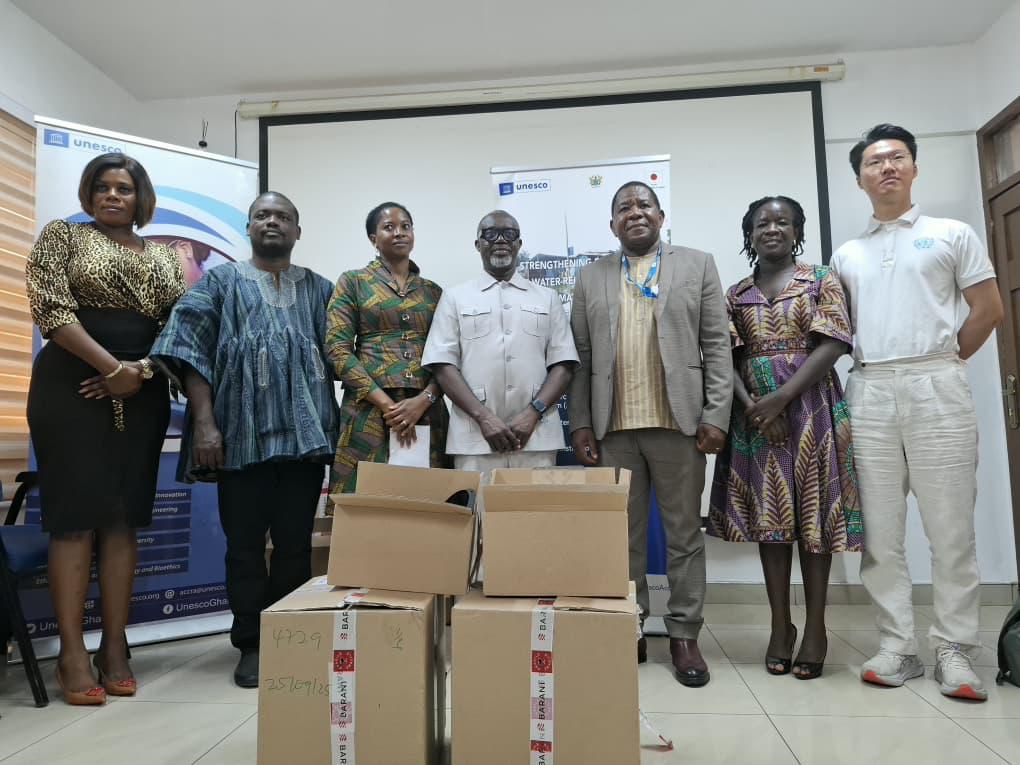
A major contributory factor to these impacts of climate change is the lack of early warning systems and access to reliable hydro-meteorological data. In a boost to Ghana’s climate resilience efforts, UNESCO has formally handed over nine modern, automated weather stations to the Ghana Meteorological Agency.
The equipment, procured with funding from the Government of Japan, will strengthen early warning systems, particularly in Northern Ghana. The provision of the equipment was in response to a call for help following the Akosombo dam spillage three years ago, which destroyed livelihoods and property in the Volta Region and parts of northern Ghana.
The sensor-based weather systems come at a time when the Ghana Meteorological Agency doesn’t have the full complement of equipment needed for accurate weather forecasts. Ideally, every district should have at least one weather station, but GMet has only 47, while there are 261 Metropolitan, Municipal, and District Assemblies (MMDAs). The nine Automated Weather Stations, which will be deployed to Northern Ghana, are expected to help the agency provide accurate, real-time hydro-meteorological data.
This will, in turn, help in monitoring and responding to floods, droughts, and other extreme weather, events. UNESCO Representative to Ghana and Head of Office in Accra, Edmond Moukala, who handed the equipment described the project as a key milestone in strengthening Ghana’s climate resilience infrastructure particularly as the country continues to face increasing risk from climate variability and extreme weather, events, including floods and droughts , which threaten life, food and development.
He said accurate, timely, and reliable, meteorological data form the backbone of effective early warning system adding that without a strong observation network, Ghana’s ability to anticipate, prepare and respond to the hazards of climate change is severely limited. The equipment will therefore strengthen Ghana’s resilience on water related disaster.
“They are instruments of anticipation rather than reaction, of prevention and response and of knowledge. These weather stations will support improve forecasting and ultimate save lives and protect livelihoods.”
Mr Moukala emphasized that UNESCO is guided by the principle that science must serve people adding the handover reflects UNESCO’s partnership approach which prioritizes national ownership, capacity strengthening, and sustainability.
Impact on GMeT Operations
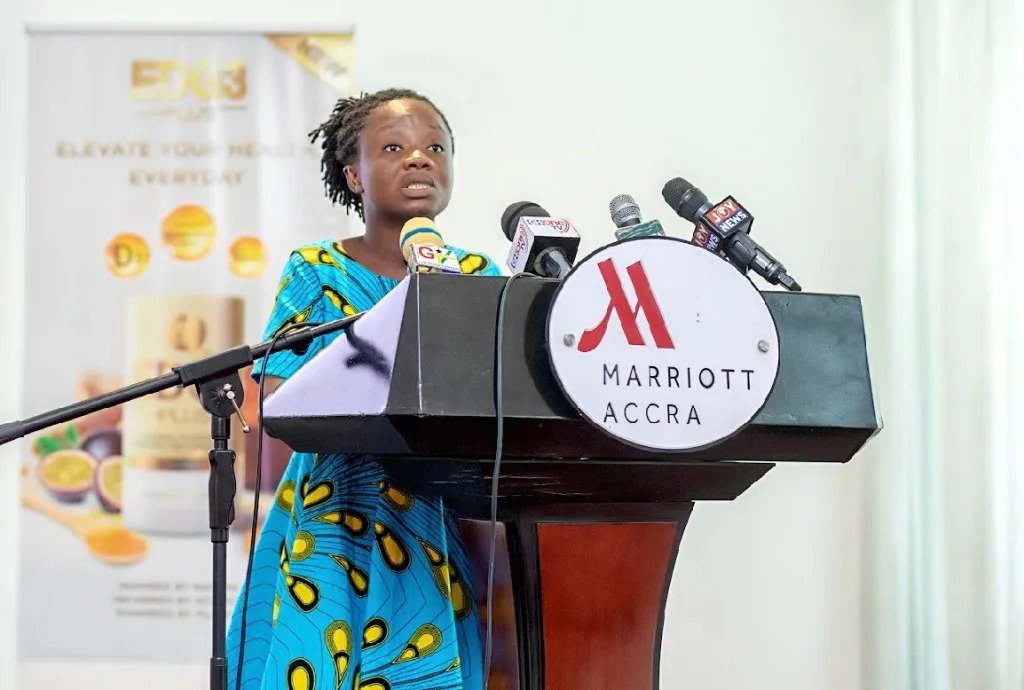
Director General of the Ghana Meteorological Agency GMet, Dr Eric Asuman, said the equipment have come at a good time especially as their services rely heavily on the data. He added that automated weather stations would help close critical data gaps and contribute to national efforts to build a more climate-resilient society.
“Data is the foundation of every product and service that we generate. In our part of the world generating or having tools in generating weather and climate data is a bit difficult. It is capital intensive and difficult to maintain.
Dr Eric Asuman noted that “to generate date previously, staff had to man the station for twenty-four hours, collecting data every hour, code them and transmit. However, with the advent of technology and the provision of these new automatic weather stations which are self-recording and self-transmission stations, it makes it a bit easier and more reliable.
Deputy Director General, Operations 1, GMeT, Dr Ignatius Kweku Williams, explained how critical the equipment are to validate local weather information that the Agency publishes.
‘Once we put out the forecast, we need observations from the ground to be able to validate whatever has happened. If we predicted a general rain for Accra, we need to know which parts of Accra received the rains and even the amount of rains that we received during the particular period. He said such information will help GMet refine its models or tweak it better for more location specific forecasts.
He highlighted GMets Adopt a Weather station initiative which is aimed to get organizations and individuals to own and provide more automated weather stations
“Ideally, within a 5km radius we are supposed to have a weather observation station. However, we currently have 47 weather stations across the country. With this, we are not going to be able to distribute enough and that’s why we have launched the Adopt a Weather Station in Ghana initiative. This is part of our meteorological awareness month this year. We are encouraging private entities, municipal assemblies, districts to be able to take up this initiative.’
How Automated weather stations (AWS) work
Automated weather stations (AWS) are sophisticated, self-operating systems that continuously monitor and record atmospheric conditions with minimal human intervention. They have sensors that detect environmental conditions and convert them into electrical signals; a data logger that samples sensor data at set interval, processes it, applies calibrations and stores the information and a communication System that sends data automatically to a central server, meteorological agency, or online platform. They provide real-time or near-real-time data on key weather parameters, which is critical for forecasting, agriculture, disaster management, and climate studies, especially valuable in regions like northern Ghana facing increasing climate variability.
About UNESCO’s Strengthening Resilience on Water-Related Disasters under Climate Change for a Sustainable Society in Ghana” project.
The automated weather stations were procured as part of UNESCO’s “Strengthening Resilience on Water-Related Disasters under Climate Change for a Sustainable Society in Ghana” project. The initiative is part of a collaboration between UNESCO, the Government of Japan, and Ghana to protect vulnerable communities from the impacts of climate change. It is a
12-month (Feb 2025–Feb 2026) USD $742,574 initiative. It tackles increased floods/droughts in the Volta Basin via early warning systems, community empowerment, and scientific innovation for sustainable water management.