
By Nana Karikari, Senior Global Affairs Correspondent
The Democratic Republic of Congo has entered a formal agreement with the Trump administration to accept third-country nationals deported from the United States. Kinshasa confirmed the arrangement on Sunday, marking Congo as the latest African partner in a growing U.S. program.
This initiative redirects migrants to secondary nations rather than their countries of origin. The deal underscores a significant shift in U.S. interior enforcement, moving toward a globalized removal network that often targets migrants from South America, including Venezuelans.
Implementation and Financial Logistics
Arrivals are scheduled to begin this month. The Congolese Ministry of Communications has not yet specified the exact number of individuals expected or a definitive start date. According to the government statement, the United States will fund the entirety of the operation.
Congo will incur no costs as the U.S. manages all necessary logistics. Local authorities have already prepared housing facilities near the capital city of Kinshasa to accommodate the incoming deportees.
Diplomatic Justification and Oversight
The Congolese government characterizes the arrangement as a “temporary” measure. Officials stated the deal reflects Congo’s “commitment to human dignity and international solidarity.” Despite the broad scope of the program, Kinshasa maintains that it will retain sovereignty over the process.
The government clarified that “Each situation will be subject to individual review in accordance with the laws of the Republic and national security requirements.” No automatic transfers are currently planned under this framework.
Broader African Cooperation and Costs
Congo joins at least seven other African nations that have signed similar deportation deals with the Trump administration. Previous agreements include partnerships with Ghana, Cameroon, Equatorial Guinea, South Sudan, and Eswatini. These nations often face significant trade and aid restrictions under current U.S. policies.
A recent report by the Democratic staff of the Senate Foreign Relations Committee indicates the administration has spent at least $40 million to deport approximately 300 migrants to these third-party countries. This spending represents a high per-capita investment in deterrence, estimated at over $130,000 per deportee.
Legal and Ethical Concerns
The program has faced intense scrutiny from legal experts and human rights organizations. Critics point to the poor human rights records and repressive nature of several participating governments. A primary point of concern involves migrants who hold protection orders from U.S. immigration judges.
These orders are intended to prevent their return to home countries where they face safety risks. Legal advocates argue that sending these individuals to third countries may circumvent established humanitarian protections by placing them in jurisdictions with limited judicial oversight.
Strategic Context and Critical Minerals
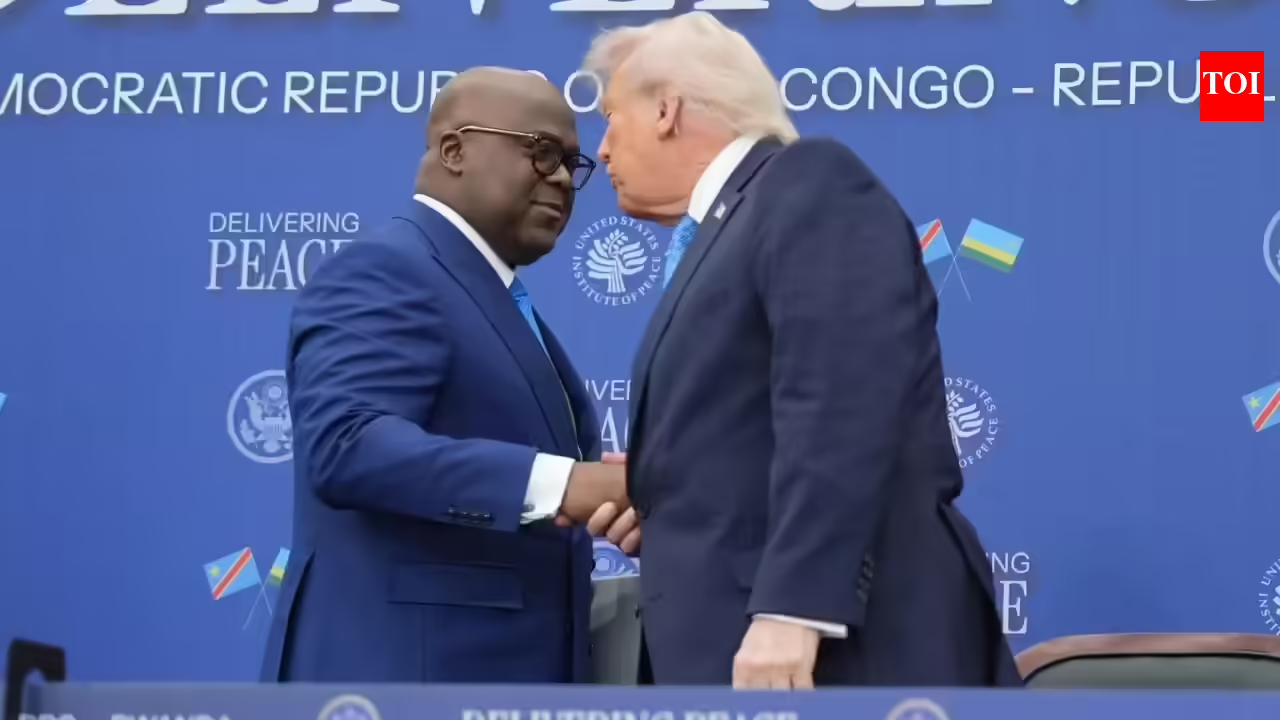
This deportation agreement emerges alongside significant regional diplomatic efforts. The Trump administration is currently working to implement a peace deal between Congo and Rwanda known as the Washington Accords for Peace and Prosperity.
Furthermore, the deal coincides with a strategic push to secure U.S. access to Congo’s vast reserves of critical minerals under a recently signed Strategic Partnership Agreement. These economic and security priorities provide a backdrop for the expanding migration partnership between Washington and Kinshasa.
Preferential Access and the Strategic Asset Reserve
The migration deal appears closely linked to the implementation of the Strategic Asset Reserve (SAR) established in early 2026. Under this framework, the Congolese government has designated a list of high-value mining assets for which U.S. companies will receive preferential investment access.
This mechanism aims to secure supply chains for cobalt and copper while countering Chinese dominance in the sector. By linking immigration logistics to resource security, the administration is utilizing “SAR designations” as a primary tool of economic and diplomatic leverage in Central Africa.
Official U.S. Response and Diplomatic Protocol
While the Congolese government was vocal in its announcement, the United States has maintained a policy of strategic discretion. When questioned about the specifics of the arrangement on Sunday, a State Department spokesperson stated that the administration had “no comment on the details of our diplomatic communications with other governments.” This mirrors previous maneuvers where third-country deals were finalized via quiet diplomatic notes rather than public treaties.
However, sources within the administration indicate that these “logistical partnerships” are viewed as essential to the broader 2026 enforcement agenda, often acting as a prerequisite for the lifting of U.S. sanctions or the granting of “favored nation” trade status.
A Balancing Act of Sovereignty and Strategy
The agreement represents a delicate balancing act for both nations. For Washington, the deal provides a vital outlet for its interior enforcement goals while securing a foothold in the global race for green energy minerals. For Kinshasa, the “zero-cost” arrangement offers a path toward rehabilitated diplomatic standing and regional stability.
However, the ultimate success of the program will likely depend on whether the promised “individual reviews” can withstand the logistical pressures of a high-speed deportation system. As the first flights prepare for departure, the international community remains watchful of how this transactional diplomacy will impact the fundamental rights of those caught in its wake.


