By Franklin ASARE-DONKOH
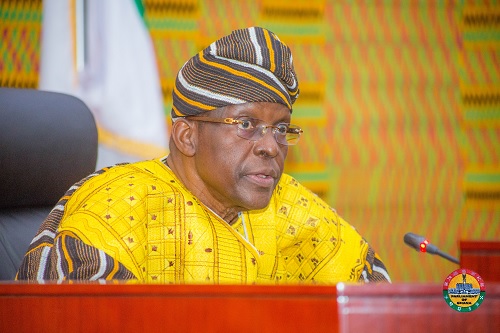
The Speaker of Ghana’s Parliament, Alban Sumana Kingsford Bagbin, has revealed that the Public Accounts Committee (PAC), as part of its anti-corruption efforts, made 252 recommendations aimed at improving transparency and accountability across government agencies.
He noted that through its diligent oversight work, PAC saved the country over GH¢273 million in 2024.
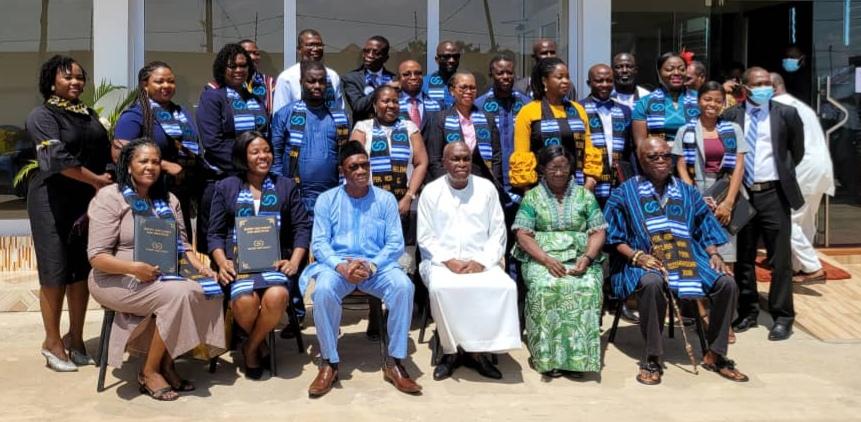
Speaker Bagbin made this known on Monday, June 2, 2025, during a courtesy call by a high-level delegation from the African Union Advisory Board Against Corruption (AUABC) to Parliament House in Accra.
The Speaker underscored Ghana’s longstanding commitment to combating corruption, highlighting various legal reforms and institutional structures developed over the years.
He recalled that in 2001, the country adopted a Zero Tolerance for Corruption policy, followed by key legislation such as the Anti-Money Laundering Act, the Whistleblower Act, the Witness Protection Act, and, more recently, the Right to Information Act.
Speaker Bagbin also pointed to the establishment of specialised anti-corruption agencies, including the Serious Fraud Office, now the Economic and Organised Crime Office (EOCO), and the Office of the Special Prosecutor.
According to him, Parliament has been at the forefront of these efforts, implementing several internal reforms to strengthen parliamentary accountability.
These, he said, include the adoption of a Code of Conduct for members and staff, revisions to the House’s Standing Orders, and the establishment of a dedicated anti-corruption department within Parliament’s governance framework.
Other reforms include the formation of the Privileges Committee, the Ethics and Standards Office, and the Office of Profits, all aimed at promoting ethical conduct among lawmakers.
In addition, a Citizens’ Bureau has been introduced to allow members of the public and civil society organisations (CSOs) to petition Parliament on national issues for further investigation and action.
Mr. Bagbin, who also chairs the Association of African Speakers, noted that Ghana’s Parliament is an active participant in the African Network of Parliamentarians, which promotes good governance across the continent.
He assured the AU Advisory Board that Parliament would continue to play a leading role in promoting integrity and combating corruption as part of national development.
On her part, the Chairperson of the AU Advisory Board, Madam Seynabou Ndiaye Diakhatè, commended Ghana for its outstanding leadership in anti-corruption efforts.
Madam Ndiaye Diakhatè noted that all African Union member states that have ratified the AU Convention are required to undergo periodic reviews.
She expressed optimism that the Board’s recommendations, following Ghana’s review, would further empower national anti-corruption institutions and enhance the country’s efforts to tackle graft.
The AU Convention on Preventing and Combating Corruption was adopted on July 11, 2003, during the Second Ordinary Session of the Assembly of the Union in Maputo, Mozambique.
It remains a key framework for addressing corruption and its impact on development across Africa.
The delegation is in Ghana for a week-long visit to assess the country’s implementation of the African Union Convention on Preventing and Combating Corruption.
As part of their mission, the AUABC is engaging key anti-corruption institutions, including the Commission on Human Rights and Administrative Justice (CHRAJ) and civil society organisations (CSOs), to exchange best practices and identify challenges in the fight against corruption.