By Nana Karikari, Senior Global Affairs Correspondent
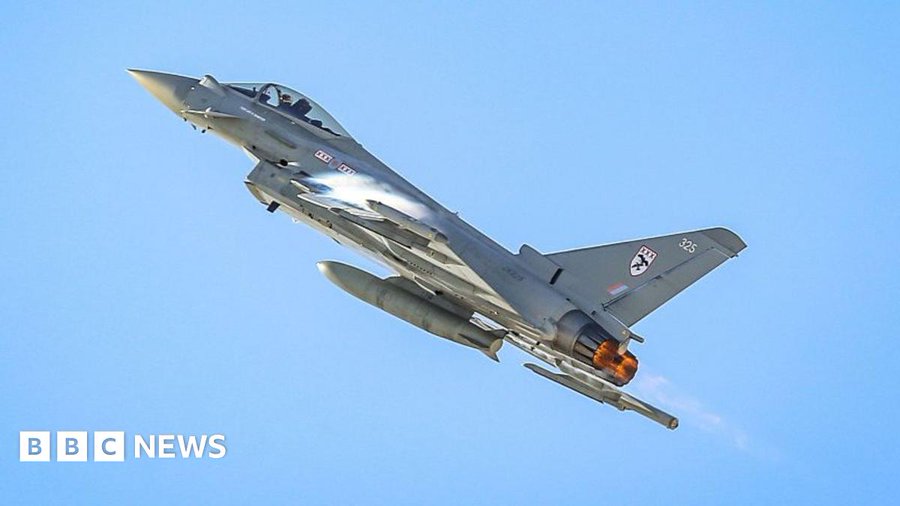
The United Kingdom has pledged a significant military package to a multinational mission designed to safeguard the Strait of Hormuz. Defense Secretary John Healey announced on Tuesday that the British contribution will feature Typhoon fighter jets, autonomous drone boats, and the air defense destroyer HMS Dragon. This mission aims to restore commercial confidence in one of the world’s most critical shipping lanes, which has been paralyzed by regional hostilities.
Strategic Deployment and New Funding
The Ministry of Defence confirmed that the British commitment is supported by £115 million in new funding designated for “cutting edge” mine-hunting technology and counter-drone systems. The package includes autonomous systems capable of detecting and clearing naval mines, high-speed Kraken drone boats, and Typhoon jets for aerial patrols. The RFA Lyme Bay is also being converted to act as a mother ship for these autonomous units. “With our allies, this multinational mission will be defensive, independent, and credible,” Healey said in a statement. This equipment joins over 1,000 British personnel already stationed in the region, including counter-drone teams and fast jet squadrons.
Escalation in the Global Energy Corridor
The Strait of Hormuz serves as the transit point for approximately 20% of the world’s oil and liquefied natural gas. Recent months have seen Iran exert control over the channel in retaliation for American and Israeli strikes, while the United States has maintained a blockade of Iranian ports. These disruptions have caused global energy prices to soar. While a ceasefire has been in effect since April, U.S. President Donald Trump warned that the agreement is on “massive life support.” Trump further dismissed Tehran’s current peace proposals as “garbage,” an assertion that triggered further spikes in oil prices. Both sides continue to accuse the other of launching attacks within the strait.
Friction Within the Western Alliance
Despite the shared goal of regional stability, tactical disagreements have emerged between London and Washington. The multinational mission—originally announced last month by the UK and France—is involving more than 40 other nations. U.S. Secretary of State Marco Rubio recently questioned the timing of the mission, asking about the utility of involvement “after it’s over.” Rubio noted that “after it’s over it’s kind of like – it doesn’t make sense,” though he later conceded there may be “some utility” in the action. U.S. Defense Secretary Pete Hegseth was more pointed, dismissing the European efforts as “silly.” Conversely, U.S. General Dan Caine argued that “now is the time” for interested nations to assist American efforts. A statement issued late Monday by State Department spokesman Tommy Pigott confirmed that Rubio and UK Foreign Secretary Yvette Cooper spoke “to discuss Iran and ongoing efforts to restore freedom of navigation.”
Domestic Political Pressure on Downing Street
The military announcement coincides with significant domestic turmoil for Prime Minister Sir Keir Starmer. Dozens of Labour MPs have called for the Prime Minister’s resignation, a topic Sir Keir avoided during a Tuesday cabinet meeting to focus on the Middle East crisis. Healey defended the Prime Minister on X, noting that Sir Keir is leading through “conflicts and looming global crises.” Healey added that “more instability is not in Britain’s interest. Our full focus now must be on dealing with immediate economic & security challenges.”
Targeted Sanctions Against Iranian Proxies
Parallel to the naval deployment, the UK has intensified its pressure on Tehran by issuing 12 new sanctions targeting nine individuals and three entities accused of hostile activity on British soil. Foreign Secretary Yvette Cooper stated that the move “directly targets organisations and individuals who threaten security on UK streets and stability in the Middle East.” She emphasized that “criminal proxies backed by parts of the Iranian regime who threaten security in the UK and Europe will not be tolerated, nor will illicit finance networks.” The sanctions target the Zindashti Network and five members of the Zarringhalam family—Farhad, Fazlolah, Mansour, Nasser, and Pouria—who are accused of helping finance efforts to “destabilise” the UK and laundering billions through a “shadow banking” network.
Humanitarian and Economic Priorities
The British government maintains that its primary objective is the restoration of free trade and the prevention of further escalation. A Downing Street spokesperson confirmed that ministers “agreed that number one priority remains getting the Strait of Hormuz open again, so that international shipping can resume.” Sir Keir Starmer has remained firm that the UK will not be “dragged” into a wider conflict and has explicitly declined to support the ongoing U.S. blockade of Iranian ports.
The success of this multinational deployment now hinges on a delicate diplomatic balance: maintaining a “strictly defensive” posture to appease domestic critics while navigating the increasingly fractured relationship between Washington’s aggressive stance and London’s preference for independent, multilateral de-escalation.