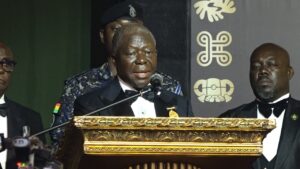
The 27th Ordinary Session of the Assembly of Health Ministers of ECOWAS officially opened on 24 April 2026 in Freetown, Sierra Leone, bringing together Ministers of Health from Member States, government leaders, technical and financial partners, and regional health experts to advance a coordinated response towards malaria elimination.
Organised by the West African Health Organisation (WAHO) in collaboration with the Ministry of Health of Sierra Leone, the two-day high-level meeting is held under the theme “Advancing Malaria Elimination Through an Integrated Regional Strategy” and aims to strengthen collective action in addressing one of the region’s most pressing public health challenges.


The event was officially inaugurated by the President of the Republic of Sierra Leone, His Excellency Julius Maada Bio, Chairman of the Authority of Heads of State and Government of ECOWAS, represented by the Chief Minister, David Moinina Sengeh.
In his address, he underscored the strategic importance of the Assembly as a platform for decisive regional action, noting that population health remains a key indicator of governments’ ability to deliver on their fundamental responsibilities.
He called for concrete, measurable outcomes and accelerated progress from malaria control to elimination through stronger, data-driven and innovative health systems, before formally declaring the session open.
In his welcome address, the Minister of Health of Sierra Leone and Chair of the 27th Ordinary Session of the Assembly of Health Ministers of ECOWAS, Dr Austin Demby, highlighted the region’s renewed political commitment to placing health at the centre of sustainable development.

He stressed the urgency of intensifying malaria elimination efforts in the face of stalled global progress since 2015, declining external financing, and the growing effects of climate change on transmission dynamics.
He called for increased domestic investment, innovation, and the transformation of health systems into more resilient and responsive platforms.
Delivering his remarks, the Director General of WAHO, Dr Melchior Athanase J. C. Aïssi, emphasised that no country can eliminate malaria in isolation.

He advocated for a coordinated regional approach built on solidarity, harmonised interventions, and strengthened data and resource sharing. While acknowledging progress, including Cabo Verde’s malaria-free certification, he cautioned that sustaining these gains requires stronger political commitment, technical rigour, and sustained domestic financing.
He further presented the regional strategic framework for malaria elimination, which prioritises strengthened health governance, digital transformation, effective data utilisation, local innovation, and community engagement.
He reaffirmed the ambition to eliminate malaria across the ECOWAS region within the next decade.
Speaking on behalf of technical and financial partners, Mr. Dionke Fofana reiterated their continued support to strengthening health systems in the region.
He underscored the Assembly’s role in defining shared priorities and called for intensified regional efforts through integrated approaches focused on domestic financing, innovation, data-driven decision-making, and enhanced private sector engagement.
He also paid tribute to the Director General of WAHO, commending his leadership and the progress achieved under his tenure despite persistent challenges.
The Assembly is expected to review the 2025 Annual Report of WAHO, adopt the Regional Framework for Malaria Elimination, consider the adoption of the Freetown Charter, and address key strategic priorities, including strengthening domestic health financing, aligning with international standards on exclusive breastfeeding, and integrating health into climate change adaptation strategies.