By: Nana Karikari, Senior Global Affairs Correspondent
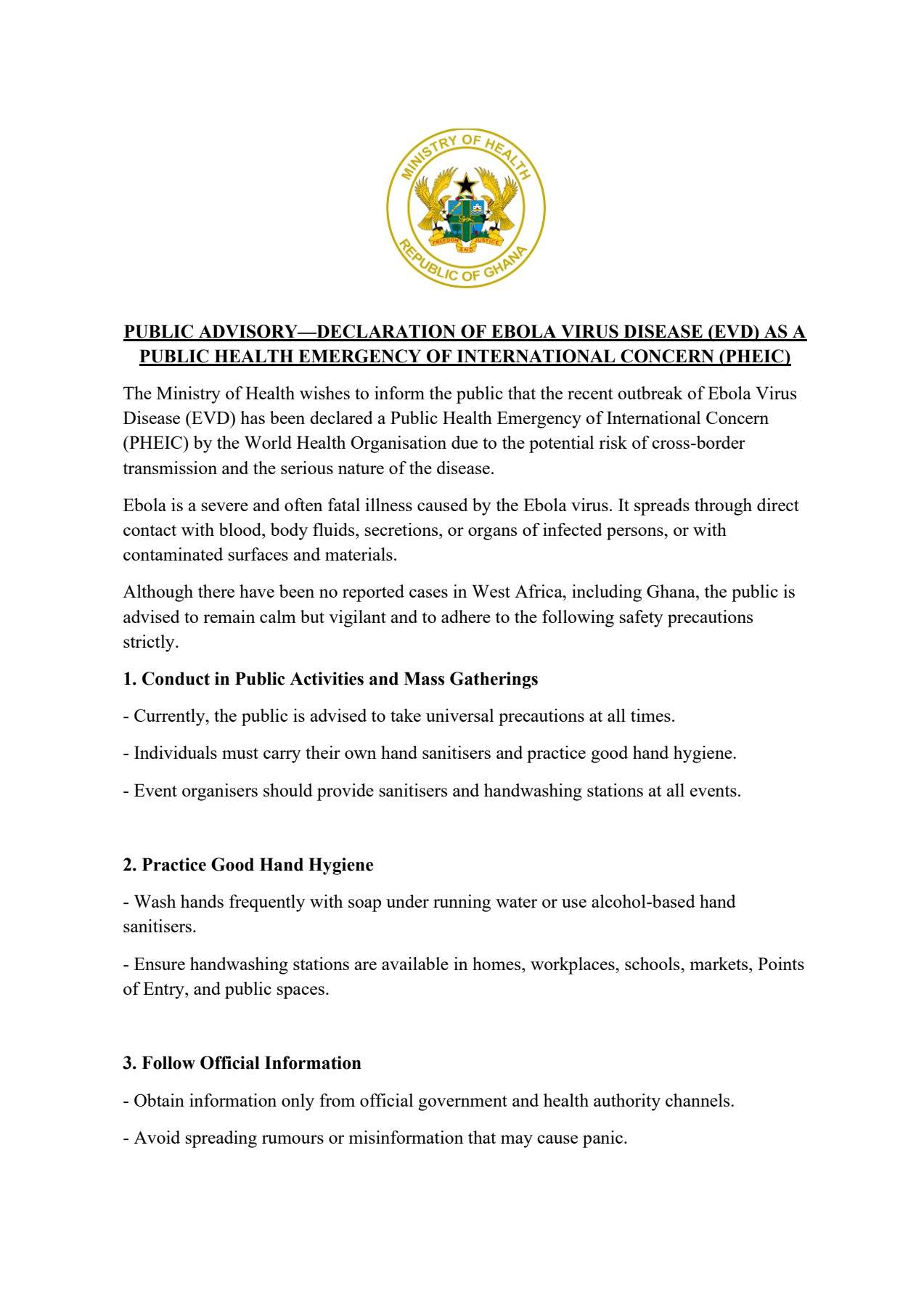
The Ghanaian Ministry of Health has issued an urgent public health alert following the World Health Organization’s declaration of the recent Ebola virus outbreak as a Public Health Emergency of International Concern. The declaration stems from rising infections in the Democratic Republic of the Congo and Uganda, which have sparked intense fears of cross-border transmission across the African continent.
Government Calls for Calm and Vigilance
Ghanaian health officials are urging citizens to remain calm but highly vigilant. In an official statement issued on Tuesday, the Ministry of Health confirmed that no cases of Ebola have been recorded within Ghana or anywhere else in the West African sub-region. Despite the absence of immediate local cases, authorities emphasize that strict adherence to preventive measures is vital to safeguarding national public health.
Nature of the Threat
Ebola is a severe, often fatal illness. The Ministry explained that the virus spreads rapidly through direct contact with the blood, body fluids, secretions, or organs of infected individuals. It can also be transmitted via materials contaminated with these fluids. Because of the high mortality rate associated with the disease, health officials stress that understanding transmission methods is the first line of defense.
The Challenge of a Treatment-Resistant Strain
The global concern surrounding this specific epidemic is compounded by the viral strain driving it. World Health Organization officials confirmed that the outbreak is caused by the Bundibugyo virus, a rare variant of Ebola. Unlike the more frequently encountered Zaire ebolavirus, the Bundibugyo strain currently lacks any licensed vaccines or approved therapeutic treatments. This therapeutic deficit elevates the significance of basic preventative countermeasures, making localized public health surveillance and individual compliance the primary tools available to halt the spread of the pathogen.
Public Spaces and Hand Hygiene Protocol
To combat potential exposure, the government advises the public to observe universal safety precautions during daily activities and mass gatherings. Individuals are strongly encouraged to carry personal hand sanitizers and maintain rigorous hand hygiene. Furthermore, event organizers must provide adequate handwashing facilities and sanitizers for all participants. The Ministry stressed the importance of regular handwashing with soap under running water or the use of alcohol-based hand sanitisers in homes, schools, workplaces, markets, public spaces and points of entry.
Recognizing Symptoms and Seeking Care
Early medical intervention remains critical to surviving the virus. The Ministry advised anyone experiencing symptoms such as sudden fever, headache, muscle pain, vomiting, diarrhoea or unexplained bleeding to immediately report to the nearest health facility for medical attention. Public health officials noted that early detection and treatment significantly improve survival rates and help reduce transmission.
Combating Misinformation and Rumors
Amid rising global anxiety, Ghanaian authorities are targeting the spread of false information. Citizens are explicitly cautioned against spreading rumors or misinformation regarding the outbreak. Instead, the Ministry is urging the public to rely only on official government and health authority communication channels for updates. This measure aims to prevent public panic and ensure accurate health guidelines are followed.
National Response and Global Partnership
The government is actively bolstering its defenses against potential importation of the virus. The Ministry stated that it is working closely with the Ghana Health Service and international partners to strengthen surveillance, screening, preparedness and response measures across the country. Officials reinforce that national security against the disease relies heavily on individual responsibility. Emphasizing this collective duty, the state’s official communication concluded, “The cooperation of every citizen is essential in preventing the spread of Ebola. Together, we can protect our families and communities.”
A Region Measured Against Past Challenges
The heightened vigilance across West Africa reflects lessons learned from the devastating 2014-2016 outbreak, which underscored how rapidly the virus can cross poorly monitored borders. However, international health observers note that the region is far better equipped today, possessing advanced surveillance networks, rapid-response medical protocols, and approved vaccines that did not exist a decade ago. By balancing strict border screening with transparent public communication, health authorities aim to contain the economic and social anxieties that typically accompany global health emergencies w authorities aim to contain the economic and social anxieties that typically accompany global health emergencies while maintaining an absolute lock on viral containment.
READ THE FULL STATEMENT FROM GHANA’S MINISTRY OF HEALTH