By Nana Karikari, Senior Global Affairs Correspondent
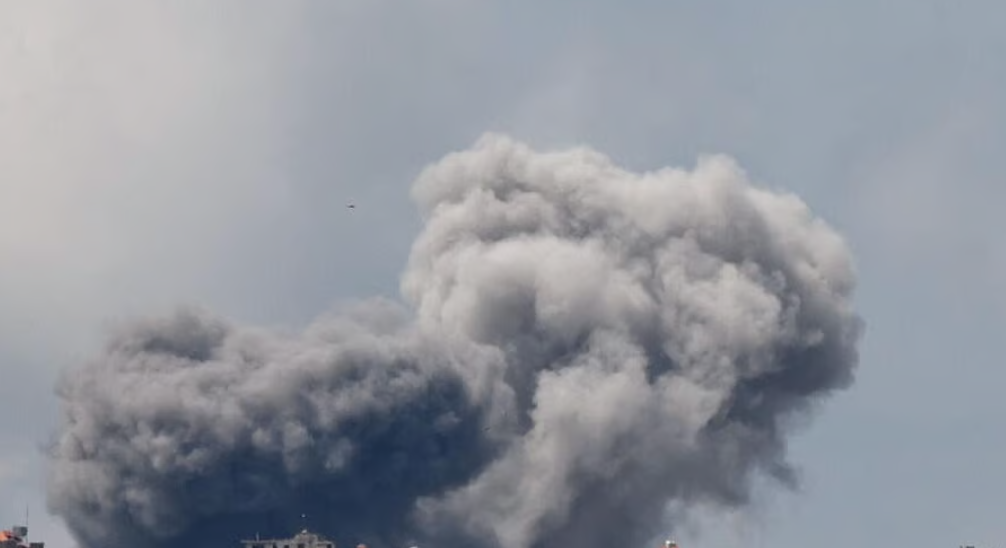
A devastating military airstrike reportedly struck a crowded market in northwest Nigeria on Sunday, resulting in the deaths of at least 100 civilians. Amnesty International reported the casualties on Tuesday, marking one of the deadliest instances of collateral damage in the government’s ongoing war against armed groups.
The strike occurred at the remote Tumfa market in the Zurmi district of Zamfara state. Witnesses reported seeing military jets hovering over the area at midday. The aircraft returned approximately two hours later to discharge their munitions into the heart of the commerce hub.
A Pattern of Market Bloodshed
This incident represents the second time in a month that a Nigerian military operation has resulted in mass civilian casualties at a public market. In April, a similar strike in Jilli, located in northeastern Nigeria, claimed the lives of approximately 200 civilians. The military has opened a probe into that incident.
The human toll in Zamfara remains staggering. Many of those killed in the Tumfa strike were women and girls. Hospitals in Zurmi and nearby Shinkafi are reportedly overwhelmed as they struggle to treat dozens of injured survivors with limited resources. Amnesty International has condemned the repeated nature of these incidents.
“This pattern of human rights violation is increasingly becoming the norm, with villagers at the receiving end of atrocities by both armed groups, bandits and the military,” Amnesty said.
Conflicting Accounts of the Strike
The Nigerian military has offered a different narrative regarding the events in Tumfa. While officials confirmed that an airstrike took place, they disputed the reports of civilian deaths. The military maintained that its operations are intelligence-led and specifically target militant hideouts. In a statement to the Associated Press, the military noted there was “no verifiable evidence of civilian casualties as being suggested in the media has been established.” This contradicts local reports from the ground. Ibrahim Bello Garba, a Red Cross official in Zamfara, confirmed the strike to the AP and stated that “multiple civilians” were killed.
The State Security Mandate
Government officials in Abuja have consistently defended the necessity of these aerial campaigns. They argue that the sophisticated nature of banditry—involving heavy weaponry and large-scale coordination—requires a robust military response that ground forces alone cannot provide. From the government’s perspective, the use of airpower is a vital tool for restoring order in ungoverned spaces where militants often use civilian infrastructure as shields. Authorities maintain that while any loss of life is regrettable, the primary responsibility for the instability lies with the armed groups terrorizing the population.
International and Domestic Pressure
The recurring loss of innocent life has sparked significant concern regarding the military’s rules of engagement. Amnesty International has labeled the airstrikes unlawful, stating they show a “disregard for civilian life.” The organization is now urging Nigerian authorities to open an immediate investigation into the Zamfara strike.
The Nigerian military is currently stretched thin. It is simultaneously battling widespread banditry in the northwest and a 17-year Islamist insurgency in the northeast. Unlike the ideological insurgency of Boko Haram, these “bandits” are decentralized criminal gangs known for mass kidnappings and rural extortion. Residents in these northern regions report increasing anxiety over military raids. They feel caught between the violence of armed groups and the imprecise firepower of the state.
Geopolitical Implications
The security vacuum in northern Nigeria has previously drawn international intervention. On Christmas Day last year, the United States conducted strikes against what it identified as Islamist bases in the northwest. This action followed accusations from President Donald Trump that the Nigerian government was failing to protect its Christian population. The U.S. administration subsequently designated Nigeria as a “country of particular concern” regarding religious freedom.
Regional Accountability and the ECOWAS Mandate
The tragedy in Zamfara resonates deeply across West Africa, particularly in Ghana, where security cooperation with Nigeria remains a top priority. In March 2026, both nations strengthened ties by signing a Memorandum of Understanding on aircraft search and rescue operations. However, this latest airstrike tests the credibility of the African Union and ECOWAS peace and security architecture.
Independent observers, including the Red Cross, have played a pivotal role in providing an objective counter-narrative to official reports. Their presence on the ground serves as a vital bridge for humanitarian aid and fact-finding in regions where government and militant propaganda often obscure the truth.
Regional observers and humanitarian groups are now calling for the activation of the ECOWAS Early Warning System to prevent further civilian harm. There is a growing demand for the incorporation of International Humanitarian Law into all military training across the bloc.
As the military continues its probe into the earlier Jilli incident, the tragedy in Zamfara adds fresh urgency to calls for fundamental reform in how the Nigerian Air Force identifies targets in civilian areas. For the families in Tumfa, the pursuit of security has once again resulted in a public slaughter, leaving the West African community to grapple with the high cost of the region’s internal wars.