By Nana Karikari, Senior Global Affairs Correspondent
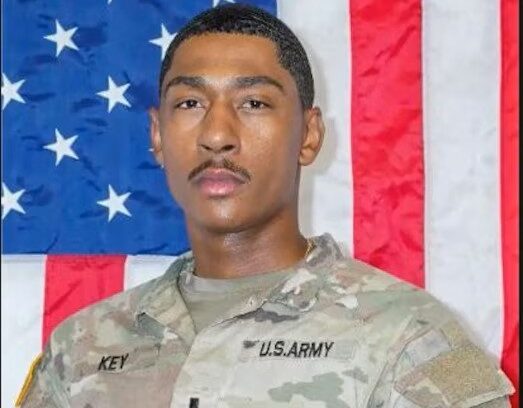
The remains of one of two U.S. soldiers who went missing during military exercises in Morocco have been recovered from the Atlantic Ocean, the U.S. Army confirmed Sunday. Moroccan search teams identified the deceased as 27-year-old 1st Lt. Kendrick Lamont Key Jr., whose body was located along the shoreline at approximately 8:55 a.m. local time on May 9. While this discovery brings closure to one family, military teams continue an intensive search for the second soldier still missing at sea.
The recovery occurred within roughly one mile of the cliffs where both soldiers entered the water near the Cap Draa Training Area. Key was a 14A Air Defense Artillery officer from Richmond, Virginia. He served as a platoon leader with Charlie Battery, 5th Battalion, 4th Air Defense Artillery Regiment, under the 10th Army Air and Missile Defense Command.
Tragic Rescue Attempt at Cap Draa
The incident took place near Tan-Tan during an off-duty excursion to view the sunset in a region defined by steep mountains and desert plains. According to a preliminary report, the emergency began around 9 p.m. when one soldier fell from a cliff into the ocean.
The remaining service members in the group attempted to form a human chain using their belts to reach the fallen comrade. When the chain failed, a second soldier jumped into the water to rescue the first individual, who reportedly did not know how to swim. A third soldier also entered the ocean in a rescue attempt but was eventually able to return to camp alone. Officials have not yet clarified if Key was the first soldier to fall or the individual who jumped in to assist.
Tributes to a Rising Leader
Brig. Gen. Curtis King, commanding general of the 10th Army Air and Missile Defense Command, expressed the deep sorrow felt across the unit. “Our hearts are with his Family, friends, teammates, and all who knew and served alongside him,” King said.
“The 10th Army Air and Missile Defense Command Family is grieving, and we will continue to support one another and 1st Lt. Key’s Family as we honor his life and service,” King added. Key’s career was marked by rapid advancement; he entered service in 2023 as an officer candidate and earned his commission through Officer Candidate School in 2024. After completing the Basic Officer Leader Course at Fort Sill, Oklahoma, he was awarded the Army Achievement Medal and Army Service Ribbon.
Ongoing Search for Second Soldier
While Key’s remains have been moved to a morgue for repatriation to the United States, the mission in Morocco remains active. Ground, air, and maritime assets continue to scour the coastline for the second missing service member. More than 600 personnel from the United States, Morocco, and other partners have participated in the search.
A U.S. defense official, speaking on condition of anonymity, confirmed that a contingent remains on-site to provide command and control for the search and rescue operations. The search involves a sophisticated array of frigates, vessels, helicopters, and drones. Despite the formal conclusion of the war games last Friday, American forces have remained on the ground to ensure every effort is made to locate the second soldier.
Strategic Impact on Ghana and Regional Security
The African Lion 2026 exercise holds significant weight for West African security architectures, particularly in Ghana. As a co-host of the drills alongside Morocco, Tunisia, and Senegal, Ghana utilizes these maneuvers to bolster its readiness against regional instability. The joint training focuses on maritime security and crisis response, which are critical for protecting Atlantic trade routes. This tragic incident underscores the high stakes of these multinational operations aimed at securing African borders.
Context of African Lion 2026
The soldiers were in the region for African Lion 2026, the largest annual U.S.-led joint military exercise in Africa. The program involves over 7,000 personnel from 30 nations. It is designed to strengthen interoperability between U.S. forces, NATO allies, and African nations.
Training accidents in this region are rare but have occurred, including a 2012 helicopter crash near Agadir that killed two U.S. Marines. The loss of 1st Lt. Key serves as a somber reminder of the inherent risks faced by service members, even during non-combat operations intended to foster international stability. As the search for the second soldier continues, the focus remains on the repatriation of a fallen officer and the support of a grieving military family.