By Nana Karikari, Senior Global Affairs Correspondent
Chinese President Xi Jinping issued a blunt warning to United States President Donald Trump during their first round of talks on Thursday. He stated that relations between Beijing and Washington could enter an “extremely dangerous place” if Mr. Trump ignored China’s demands over Taiwan. The two leaders—representing the world’s two largest superpowers—met for high-stakes talks at the Great Hall of the People. The summit is expected to focus on Taiwan, trade, and the Iran war.
A Stark Warning Amid Pageantry
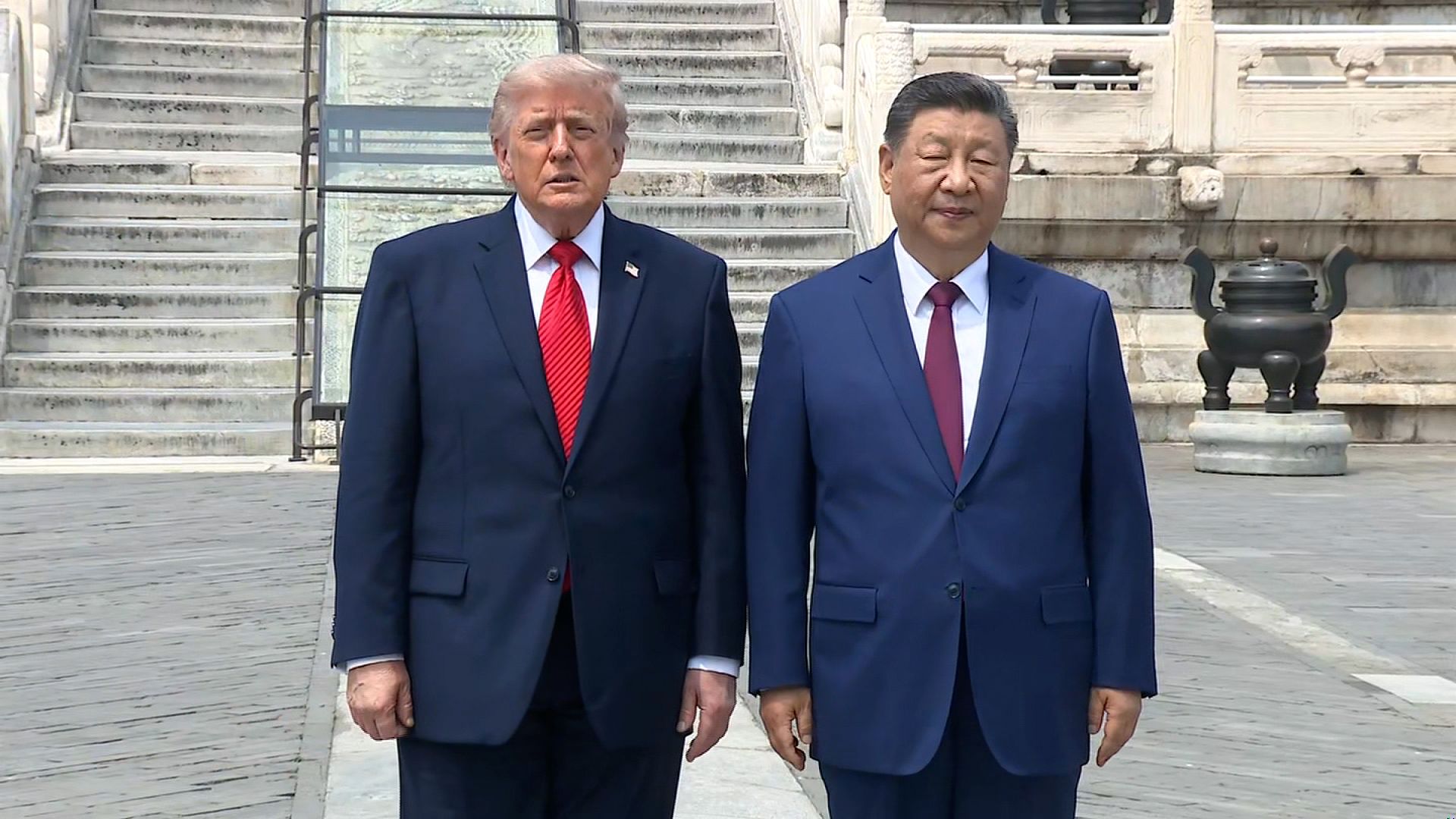
The two leaders greeted each other with smiles at a welcome ceremony featuring leaping schoolchildren and a military honor band. There was no “big, fat hug” from Xi as Trump promised last month, but the pair had an extended handshake and Trump later offered him several warm pats on the arm as they toured the plaza. However, the tone shifted once formal discussions began. Mr. Xi made clear that he would press Mr. Trump on Taiwan, the island democracy that Beijing considers its territory to be taken by force if Chinese leaders eventually decide.
Xi warned of “clashes and even conflicts” with the United States over the issue. He cautioned that tensions could jeopardize ties between the world’s two biggest economies. “The Taiwan question is the most important issue in China-US relations,” said Xi. “If mishandled, the two countries could face confrontation or even conflict, pushing the entire China-US relationship into a highly dangerous situation.” He suggested that the U.S. must slow or reduce American arms sales to the island to avoid this “extremely dangerous place.”
Diplomatic Pleasantries and Strategic Stability
Despite the warnings, both men offered public praise in opening remarks. Trump hailed their “fantastic relationship” and called Xi a “great leader,” noting he had “such respect” for him. He stated, “We’ve gotten along when there were difficulties, we worked it out.”
Xi said the world had “reached a new crossroads” and that the U.S. and China had a responsibility to work together. “We should be partners, not rivals, achieve success for one another, prosper together and forge a correct way for major countries of the new era to get along with each other,” Xi said.
The leaders agreed to establish “constructive strategic stable relations” as a new orientation for the next three years. Xi defined this as “not just a slogan; it should be an action that moves toward the same goal from both sides.” He further characterized it as “a positive stability characterized primarily by cooperation, a benign stability with well-regulated competition, a normal stability with manageable differences, and a lasting stability with predictable peace.”
Trade Tensions and Economic Cooperation
The summit followed bilateral trade talks in South Korea led by Treasury Secretary Scott Bessent and Chinese Vice Premier He Lifeng. Xi pushed back against Trump’s tariffs last year but noted progress. He repeated that “trade wars have no winner.” Xi welcomed the “generally balanced and positive outcomes” achieved in the latest round of talks.
“China-U.S. economic and trade ties are mutually beneficial and win-win in nature,” Xi said. “Where disagreements and frictions exist, equal-footed consultation is the only right choice.” Trump was joined by a delegation of American CEOs, including Elon Musk, Apple’s Tim Cook, and Nvidia’s Jensen Huang, who joined at a refueling stop in Alaska. Boeing’s Kelly Ortberg also attended, with the White House previewing a possible aerospace deal. Trump said his “very first request” would be to grant American companies greater access to China, noting business will be “totally reciprocal on our behalf.”
The Shadow of the Iran War
The U.S.-Israeli war with Iran loomed large over the summit, having already caused the meeting to be postponed by six weeks. Trump is expected to seek assistance from China to bring an end to the conflict. On paper, Beijing is well-positioned, having brokered the 2023 rapprochement between Iran and Saudi Arabia. China buys upwards of 90% of Iran’s oil and has significant leverage.
However, Xi is expected to navigate these requests cautiously. Beijing wants to be seen as an alternative leader to the U.S. rather than a country doing its bidding. Xi will likely continue to call for the Strait of Hormuz to be opened to win goodwill, but he remains
hesitant to reinforce any agreement that bolsters U.S. military dominance. He must also protect ties with Iran, a fellow member of the BRICS organization.
Uncertain Future for Taiwan Policy
U.S. lawmakers have expressed concern that Trump might make concessions on Taiwan to secure deals on trade or Iran. Taiwan relies on U.S. political and military support to deter Beijing, and the Taiwan government said it was preparing for possible “surprises.” Trump administration officials maintain that U.S. policy on Taiwan is not expected to change.
After a two-hour and fifteen-minute meeting and a visit to the Temple of Heaven, a vast architectural masterpiece dating to 1420, Trump described the talks as “great.” “Great place, incredible. China is beautiful,” he said. He did not respond to questions regarding his specific comments on Taiwan. The two leaders are scheduled to attend a lavish state banquet Thursday night before meeting again Friday morning.
Global Implications for African Markets
The outcome of these talks resonates deeply across the African continent. African nations view the U.S. and China as primary partners for infrastructure and digital development. Any trade escalation between the two giants could drive up costs for African imports. Conversely, a stable “win-win” relationship, as described by Xi, may foster a more predictable environment for African trade via the AfCFTA. Stability in the Pacific remains vital for the steady flow of Chinese investment into Ghana’s energy and mining sectors.
The African Role in the New Era
Beijing’s mention of BRICS highlights a shifting global order that includes African voices. As China positions itself as an alternative to Western dominance, nations like Ethiopia and Egypt—new BRICS members—watch closely. Trump’s “reciprocal” trade stance may challenge current U.S.-Africa agreements if he seeks to match Chinese influence. For Africa, the Beijing summit is a barometer for future sovereign autonomy. The continent seeks to avoid being caught in a new Cold War between its two largest external partners.==
The Strategic Balancing Act
As the first day of this historic summit concludes, the world watches a delicate dance between two men who alternate between personal warmth and geopolitical brinkmanship. While the pageantry at the Great Hall of the People suggests a desire for
“predictable peace,” the underlying friction over Taiwan and trade remains a volatile constant. The success of this summit will likely be measured not by the smiles in the Temple of Heaven, but by whether these two superpowers can truly transform “constructive strategic stability” from a diplomatic slogan into a functional reality that prevents global conflict.