By Nana Karikari, Senior Global Affairs Correspondent
Oil prices surged on Monday morning following a sharp escalation in rhetoric between the United States, Israel, and Iran. International benchmark Brent crude rose 2.5% to reach $103.80 (GH₵1,468.77) per barrel. The benchmark has increased approximately 40% since the U.S. and Israeli-led military campaign against Iran commenced on Feb. 28. Market volatility follows a series of diplomatic setbacks that have undermined hopes for a swift resolution. While Citi analysts note crude markets were previously cushioned by strategic reserve releases, they warn risks remain tilted to the upside. The continued closure of the Strait of Hormuz remains the primary driver of global economic anxiety and regional price hikes.
Trump Rejects Iranian Counteroffer on Social Media
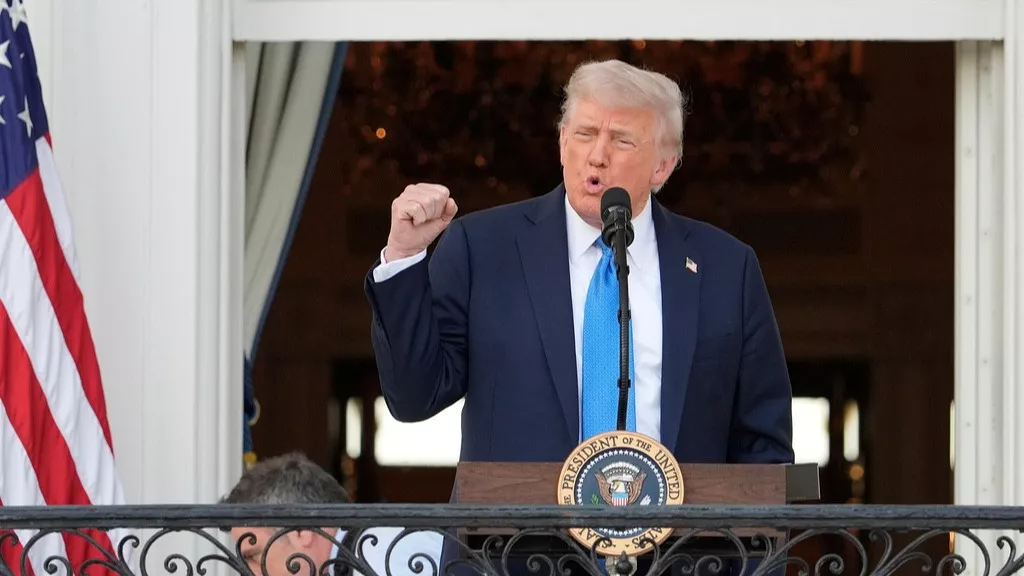
President Donald Trump took to Truth Social on Sunday to dismiss a peace proposal sent by Tehran through Pakistani mediators. The President characterized the response as a non-starter for his administration. “I have just read the response from Iran’s so-called ‘Representatives.’ I don’t like it — TOTALLY UNACCEPTABLE!” Trump posted. Iranian state television reported that Tehran rejected the U.S. proposal as amounting to surrender. They insisted instead on “war reparations by the U.S., full Iranian sovereignty over the Strait of Hormuz, an end to sanctions, and the release of seized Iranian assets.” Trump accused the regime of “playing games” for nearly 50 years. He added that “they will be laughing no longer!”
Netanyahu Warns of Unfinished Military Objectives
Israeli Prime Minister Benjamin Netanyahu signaled that the campaign against Iran is far from its conclusion. In an interview with CBS’s “60 Minutes,” the Prime Minister emphasized the remaining threats to regional security. “There’s still nuclear material, enriched uranium that has to be taken out of Iran,” Netanyahu said. He cited the need to dismantle enrichment sites and ballistic missile facilities. “There’s work to be done,” he added. When questioned on the logistics of removing nuclear material, Netanyahu was blunt. “You go in, and you take it out,” he stated. He also noted that “Trump has said to me, ‘I want to go in there,’ and I think it can be done physically.” Netanyahu denied reports that he promised Trump the war would cause regime change. “We both agreed, you know, that there was both uncertainty and risk involved,” he said. “The danger, there’s danger in action, in taking action, but there’s greater danger in not taking action.”
Escalation in the Strait of Hormuz
The maritime standoff remains the focal point of the conflict. Roughly 20% of the world’s oil passed through the Strait of Hormuz before the Feb. 28 attacks. President Trump asserted the U.S. now holds the upper hand in the waterway. “We really control it; they don’t. And we’ve taken the business away from them,” Trump told the media. He noted there are “no boats going into Iran” and that “they’re dying.” Despite these claims, a fragile ceasefire was tested by drone strikes off Qatar and Kuwait. The UAE reported shooting down two drones and blamed Iran for the provocation. Qatar called the ship attacks a “dangerous and unacceptable escalation that threatens the security and safety of maritime trade routes.” Additionally, South Korea reported two unidentified objects struck the vessel HMM NAMU while it was anchored in the strait.
Iranian Resistance and Nuclear Readiness
Tehran’s military remains on “full readiness” to protect uranium storage sites from potential theft or sabotage. The U.N. nuclear agency reports Iran has over 440 kilograms of uranium enriched to 60% purity. “We considered it possible that they might intend to steal it through infiltration operations or heli-borne operations,” Brig. Gen. Akrami Nia told IRNA news agency. Meanwhile, Iran’s new supreme leader, Mojtaba Khamenei, reportedly issued “decisive directives for the continuation of operations and the powerful confrontation with the enemies.” Russian President Vladimir Putin stated Saturday that Moscow’s proposal to take enriched uranium from Iran to help negotiate a settlement “remains on the table.”
Economic Fallout and Demand Destruction
Energy analysts are increasingly concerned about the long-term impact on the global economy. Felipe Elink Schuurman, CEO of Sparta Commodities, warned of “demand destruction” similar to the 2020 pandemic. “In 2020, on average, we lost 9 million barrels per day of demand versus 2019, which is pretty much the equivalent of what we are losing now in terms of supply,” Schuurman told the media. He warned that richer countries will pay up for products while others suffer. “You are going to end up in a scenario where poorer countries are going to have a humanitarian crisis, Europe is going to have an economic crisis and the U.S., a political one,” he cautioned.
The African Windfall and the Weight of Import Costs
For Ghana and other African oil producers, the surge represents a double-edged sword for the continental economy. While higher crude prices provide a fiscal windfall for state budgets, the continent remains heavily reliant on imported refined petroleum. In Ghana, the National Petroleum Authority recently adjusted fuel price floors as Brent surpassed $100. Diesel prices in the region peaked near GH₵17.10 per litre in mid-April before a slight stabilization in May. Analysts at IC Group suggest that while gold export receipts provide a buffer for the Ghana Cedi, the rising energy import bill threatens to push inflation higher. This creates a “2026 crossroad” where nations must balance increased oil revenue against the rising cost of transport and food for citizens.
Stalled Diplomacy and the Path Forward
U.S. Ambassador to the UN Mike Waltz stressed that “diplomacy is ongoing,” though negotiations have gone “longer and slower, I think, than anyone would like.” Energy Secretary Chris Wright noted the U.S. is seeking the “free flow of traffic through the international waters that are the Straits of Hormuz, and an end to the Iranian nuclear program.” He added that “when we start to get free flow of traffic through the Strait of Hormuz, energy prices will come down.” Iran’s Foreign Minister Abbas Araghchi countered that “every time a diplomatic solution is on the table, the U.S. opts for a reckless military adventure.” Iran also warned against a French-British maritime security effort. Kazem Gharibabadi stated any cooperation with “illegal U.S. actions” would be met with a “decisive and immediate response.”
The standoff now centers on whether the U.S. blockade can compel a diplomatic surrender before global economic pressure reaches a breaking point. While President Trump maintains that “it’s over when it’s over” and expresses a desire for the “best deal,” the international community remains caught between nuclear escalation and a deepening energy crisis. With Israeli leadership seeking to “draw down to zero” U.S. military aid over the next decade and Iran signaling a protracted defense of its sovereignty, the path to regional stability remains obscured by mutual distrust and the high stakes of the world’s most critical energy corridor