By Nana Karikari, Senior Global Affairs Correspondent
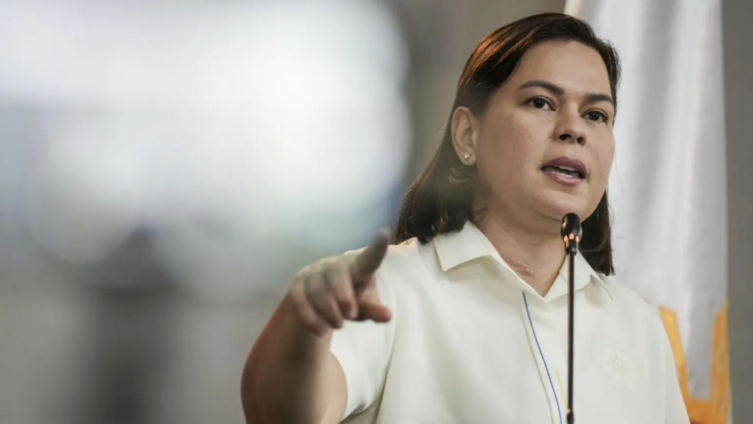
An overwhelming majority of Philippine lawmakers voted on Monday to impeach Vice President Sara Duterte for a second time. This historic move by the House of Representatives escalates a bitter political feud between the nation’s two highest leaders and threatens to derail Duterte’s 2028 presidential ambitions.
The lower house approved two separate impeachment complaints, serving as a barometer of President Ferdinand Marcos Jr.’s support. Of the 290 lawmakers in attendance, 257 voted to impeach, while 25 voted against and nine abstained. This outcome far exceeded the one-third requirement needed to advance the case.
Specific Allegations and Criminal Complaints
The case centers on the alleged misuse of public funds, unexplained wealth, and bribery. Representative Gerville Luistro noted the complaints include huge bank transactions not declared as required by law. These allegations cover her tenure as vice president and as education secretary.
The articles of impeachment also cite public threats made against the president. During a 2024 online press conference, Duterte targeted Marcos, the First Lady, and the former House speaker. “If I get killed, go kill BBM [President Marcos], [First Lady] Liza Araneta, and [House Speaker] Martin Romualdez,” Duterte said.
The vice president later claimed she was expressing concern for her own safety, warning her threat “wasn’t a joke.” Her husband, Manases Carpio, has filed criminal complaints against lawmakers for making their bank records public, alleging a violation of bank secrecy laws.
Historical Context and Judicial Intervention
This marks the second time the House has impeached the 47-year-old official. Duterte was impeached on similar grounds in 2025, but the Supreme Court blocked that effort on a technicality.
Duterte has dismissed the current proceedings. She described the case as “nothing more than a scrap of paper” in a formal response. She refused to appear in committee hearings and labeled them as politically motivated. Her legal team remains defiant. “The burden now rests on the accusers to substantiate their claims in accordance with the constitution, the law, and rules on evidence,” her defense counsel said, adding that “while questions of constitutional significance remain pending before the Supreme Court, we are fully prepared to defend the vice president before the Senate.”
Senate Leadership Shakeup and Trial Uncertainty
The case now moves to the Senate for a formal trial. A conviction requires a two-thirds majority of the 24 members. If convicted, Duterte will be disqualified from holding any public office.
A leadership change in the Senate has cast doubt on the trial’s outcome. Senate President Vicente Sotto III was ousted shortly before the House vote. He was replaced by Alan Peter Cayetano, a longtime ally of the Duterte family. Sotto told reporters that he and his allies would “insist that the proceedings against the vice president should be immediately taken up once submitted.” However, candidates allied with Duterte fared better than the Marcos coalition in the 2025 midterm elections, making a conviction far from certain.
The Unravelling of a Landslide Alliance
The impeachment signals the total collapse of the “UniTeam” alliance. Duterte and Marcos won the 2022 election by a landslide but have since pursued divergent political agendas.
Duterte has accused Marcos of corruption and allowing the ICC to carry out the “kidnapping” of her father. Former President Rodrigo Duterte was arrested in March last year and is currently detained at The Hague.
The political tension was visible on Monday as Senator Roland dela Rosa, a Duterte ally, sought protection in the Senate plenary hall to evade National Bureau of Investigation officers. Dela Rosa remains under scrutiny for his role in the previous administration’s drug war.
The ICC Factor: A Precedent for Global and African Governance
The proceedings against the Duterte family hold significant resonance for African nations, particularly Ghana, which maintains a robust engagement with the International Criminal Court (ICC). The elder Duterte’s detention at The Hague for “crimes against humanity” mirrors high-profile cases involving African heads of state, highlighting a global shift toward ending executive immunity for alleged human rights abuses. For African observers, this case serves as a critical study in how domestic impeachment processes and international judicial interventions can intersect to challenge entrenched political dynasties.
Implications for the 2028 Presidential Race
Despite the legal challenges, Duterte remains a formidable political force. She announced her 2028 presidential bid in February and holds a 17-point lead over her nearest rival.
The constitution limits President Marcos to a single six-year term. His allies previously dismissed impeachment efforts against him in February. Both leaders have denied all allegations of wrongdoing. Representative Leila de Lima, who endorsed the complaint, insisted the process is necessary for accountability. “These are matters that go into the integrity and accountability and fitness of a public official,” De Lima said, adding that “impeachment is not political persecution.”
The outcome of the impending trial remains difficult to predict within a multi-party system defined by patronage and shifting dynastic alliances. As the Senate prepares to convene, the proceedings represent more than a legal hurdle for Duterte; they serve as a definitive stress test for the stability of Philippine democracy and the endurance of its most powerful political families.