By Nana Karikari, Senior Global Affairs Correspondent
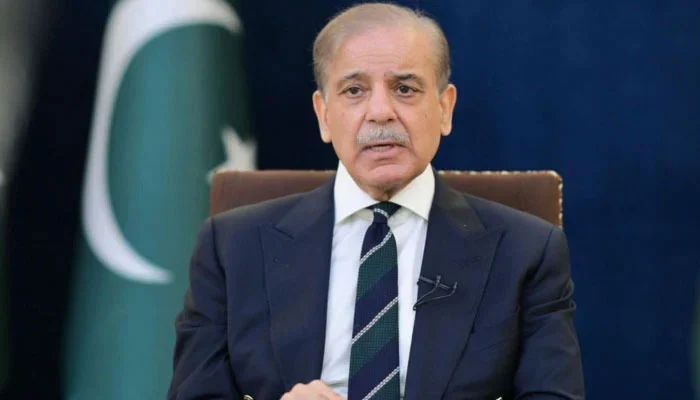
Iran has formally submitted its response to a United States proposal aimed at ending the regional war that began on February 28. The diplomatic breakthrough was facilitated by Pakistan, acting as a primary mediator. While specific contents remain confidential, Prime Minister Shehbaz Sharif confirmed receipt of the Iranian response, though he did not specify if it had yet reached Washington.
The development comes amid a month-old ceasefire that has been marred by sporadic maritime clashes. The response “was given through mediator Pakistan,” state news agency IRNA said, without specifying what the response was. “According to the proposed plan, negotiations at this stage will focus on the issue of ending the war in the region.” Iranian state media further indicated the response prioritizes “ending the war and maritime security” in the Gulf and the Strait of Hormuz. However, U.S. Ambassador to the UN Mike Waltz noted that the Trump administration is evaluating the feedback against a “very clear red line” regarding nuclear weapons. “We’ll see what the Iranians just came back with overnight in terms of their response to our very clear red line,” Waltz told the media.
Framework for a Potential Settlement
The American proposal reportedly centers on a 14-point memorandum of understanding. Reports suggest the U.S. framework demands a total suspension of Iranian nuclear enrichment, the lifting of sanctions, and the restoration of free transit through the Strait of Hormuz. These terms would be contingent on a final agreement being reached, according to sources briefed on the matter.
President Donald Trump expressed optimism regarding the timeline this week. “It’s over when it’s over,” Trump told reporters. “But we certainly have won militarily. We have to get people to come out of the caves and sign something.” Earlier, Trump warned on social media that if no deal is reached, “the bombing starts, and it will be, sadly, at a much higher level and intensity than it was before.”
Military Realities and Nuclear Deadlocks
Israeli Prime Minister Benjamin Netanyahu maintains the war cannot conclude until Iran’s nuclear infrastructure is dismantled. “There’s still enrichment sites that have to be dismantled,” Netanyahu said in an interview with the media. He emphasized that enriched uranium must be physically removed from Iran. “I’m not going to talk about military means, but what President Trump has said to me – ‘I want to go in there’ – and I think it can be done physically,” Netanyahu added. “That’s the best way.”
In response, Iranian Foreign Minister Abbas Araghchi criticized the American approach. “Every time a diplomatic solution is on the table, the U.S. opts for a reckless military adventure,” Araghchi said.
Escalation in the Vital Waterways
The Strait of Hormuz remains the primary flashpoint, carrying one-fifth of the world’s oil. Iranian military spokesman Mohammad Akraminia warned that vessels passing through would face “severe consequences” if they did not cooperate with Tehran. “Americans will never be able to turn this vast expanse in the northern Indian Ocean into a real blockade by covering it with their fleet,” Akraminia stated.
Despite the rhetoric, a Qatari natural gas tanker, the Al Kharaitiyat, crossed the strait on Sunday for the first time since the war began, heading for Pakistan. Sources said the transfer offered relief to Pakistan after power blackouts caused by a halt to gas imports. Simultaneously, a Panama-flagged carrier bound for Brazil passed through a route designated by Iranian armed forces.
Regional Instability and Proxy Conflict
The fragile ceasefire faced fresh tests as the UAE intercepted two drones from Iran and Kuwaiti air defenses engaged “hostile drones.” In Qatar, a bulk carrier was struck by an unknown projectile 23 nautical miles northeast of Doha, causing a small fire. Iran’s Fars news agency cited a source claiming the vessel “was sailing under the U.S. flag and belonged to the United States.”
Iranian President Masoud Pezeshkian remains defiant. “We will never bow our heads before the enemy, and if talk of dialogue or negotiation arises, it does not mean surrender or retreat,” Pezeshkian said. Lawmaker Ebrahim Rezaie added, “Time is moving against the Americans… The best option is to surrender.” Deputy Speaker Ali Niksad warned the U.S. must “accept the consequences” of testing a powerful Iran.
Economic Stakes and Global Pressure
The conflict has driven U.S. gas prices to a $4.52 average (approximately GH₵ 50.76), while Brent crude sits near $100 per barrel (approximately GH₵ 1,123.48). U.S. Energy Secretary Chris Wright noted the U.S. seeks the “free flow of traffic… and an end to the Iranian nuclear program.” He left the door open to suspending the federal gas tax. White House economic adviser Kevin Hassett predicted a “gusher of oil” would bring prices down once the strait fully reopens.
While a CIA assessment suggested Iran could withstand a blockade for four months without a major crisis, the U.S. continues to enforce its own blockade of Iranian ports to force Tehran to the table. International support for the U.S. position is limited, with many NATO allies refusing to send ships without an internationally mandated mission.
Leadership Uncertainty in Tehran
Negotiations are complicated by the status of Supreme Leader Mojtaba Khamenei. Ambassador Waltz noted that Khamenei “has been severely injured. He’s in hiding. He’s incredibly difficult to get a hold of.” While state media claims Khamenei met with Maj. Gen. Abdollahi to review “the readiness of Iran’s armed forces,” no visual evidence was provided. Abdollahi reportedly told Khamenei that Iran has the weapons to “respond swiftly, intensely, and powerfully” to any strategic mistake.
African Energy Security and the Cost of Conflict
For nations across Africa, the resolution of this conflict is not merely a matter of distant diplomacy but a requirement for economic survival. The surge in global oil prices has had a cascading effect on African economies, inflating the cost of transport and basic commodities from Accra to Nairobi. As Ghana and its neighbors navigate post-pandemic recoveries, the “gusher of oil” predicted by Washington is desperately needed to stabilize local currencies and reduce the burden on African consumers.
Additionally, the precedent set by the maritime blockade in the Strait of Hormuz raises concerns for African trade routes. African diplomats are closely watching the 40-nation meeting in London, as the outcome may dictate how international shipping lanes—critical to African exports—are policed in the future. The hope remains that a diplomatic exit in the Middle East will restore the global energy equilibrium essential for Africa’s industrial growth.
As the May 14 date for talks between Israel and Lebanon approaches in Washington, the international community remains divided between the hope for a diplomatic exit and the reality of a region still trading fire on multiple fronts.